Twitter

Thursday, November 3, 2011

Constituency Profile: Saskatoon Centre

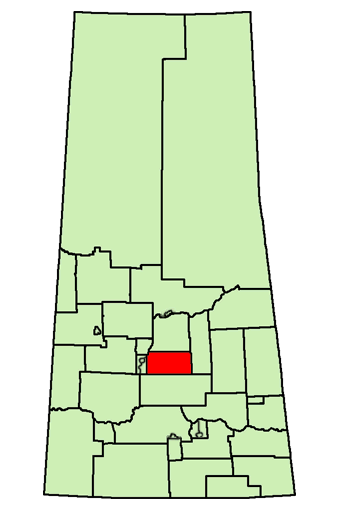
Saskatoon Centre is outlined in red on the map above.

For more information on Saskatoon Centre, please click here.

Saskatoon Centre was first created as an electoral district in 1975, was known as Saskatoon Idylwyld from 1991 to 2003, and since 2003 is called Saskatoon Centre again. This seat is an NDP stronghold on the west side of the river in Saskatoon.

The first MLA for Saskatoon Centre was Paul Mostoway of the NDP. Mostoway was re-elected in 1978 but was defeated in 1982 in the "Monday Night Massacre". From 1982 to 1986, the MLA for this seat was Progressive Conservative Jack Sandberg, a CFQC TV announcer who served briefly in the Devine Cabinet. Sandberg was defeated in 1986 by Anne Smart of the NDP. But Smart lost her nomination meeting to run again in 1991 to a young lawyer named Eric Cline, who would go on to become a well-known cabinet minister in the Romanow and Calvert Governments, including the post of Finance Minister. Cline was the MLA for Saskatoon Idylwyld until 1995, then fellow New Democrat Janice MacKinnon was the MLA here until 2001. MacKinnon was the first woman Finance Minister in Canada and brought in the first balanced budget in Canada in 1994.

David Forbes, a teacher and vice-principal, won the by-election to replace MacKinnon, and was re-elected in 2003 and 2007 in Saskatoon Centre. Forbes is standing for re-election on November 7. Apparently polling of voters in Saskatoon Centre shows that Forbes has a substantial lead in the riding, and is in no danger of being defeated. Thus he is very likely to survive the electoral tsunami headed for the Saskatchewan NDP on November 7.

Constituency Profile: Saskatoon Nutana

Saskatoon Nutana constituency is outlined in red on the map above.

For more information on Saskatoon Nutana, please click here.

The constituency now called Saskatoon Nutana was first contested in 1967 when Saskatoon first had multiple constituencies. In that election the seat was won by Clarence Estey of the Liberals over future NDP MLA and cabinet minister Wes Robbins. Estey lost to Robbins in 1971, and Robbins was re-elected in in 1975 and 1978. In 1978, Robbins was challenged by a young Agricultural Economics Professor from the U of S who was running for the PCs; has name was Grant Devine.

In 1982, Robbins retired and the seat was won by Evelyn Bacon of the PCs in the "Monday Night Massacre". Bacon only won by 105 votes. In 1986 Pat Atkinson stormed to victory in Saskatoon Nutana by easily defeating Bacon. Atkinson has since been re-elected in Saskatoon Nutana by wide margins in 1986, 1991, 1995, 1999, 2003 and 2007. Atkinson's margin of victory in 2007 was 52 percent compared to 29 percent for the Sask Party. Atkinson held a variety of cabinet posts in the Romanow and Calvert Governments, including Minister of Health, Minister of Education, Minister of Social Services, and Minister of Finance.

Atkinson announced earlier this year that she was not seeking re-election, making way for her constituency association president Cathy Sproule to run in her place. Sproule is being challenged by Zoria Broughton of the Sask Party. Broughton had run for the Liberals in Saskatoon Southeast in 2003. Some folks in the Sask Party believe that with the immense popularity of Premier Wall could push them over the top in Saskatoon Nutana this time. However the conventional wisdom is that Sproule will successful stave off the challenge, but it could be a close contest. An NDP win in Saskatoon Nutana is the most likely outcome, and any gain by the Sask Party here would be deemed an upset, and would likely mean that the Sask Party has won almost every seat in the Leg this time.

Constituency Profile: Athabasca

Athabasca constituency is outlined in red on the map above.

For more information on Athabasca constituency, please click here.

Athabasca has a long and interesting political history. The current Athabasca constituency traces its history back to the pivotal 1934 provincial election. That was the time when the Anderson Government lost every MLA, the Liberals won a landslide with 50 out of 55 seats, and a new party called the Farmer-Labour Party won 5 seats (this party later changed its name to the CCF). The Liberals won Athabasca in 1934, and the winner was Deakin Hall. Hall was a Liberal MLA in northern Saskatchewan from 1913 until 1944. Anyhow, Hall was MLA for Athabasca from 1934 to 1938 and then switched ridings. In 1938 the new Liberal MLA for Athabasca was Jules Marion, a Metis politician and businessman who lost to Hall in 1934, as a Liberal. Yes, the two candidates were both Liberals ,and one lost to another. Anyhow, Marion was an MLA in the north from 1926 to 1934 and from 1934 until his death in 1941. Liberal Hubert Staines won a 1941 by-election by-acclamation, and in 1944 Staines made way way for fellow Liberal Louis Marion, son of Jules Marion. Marion survived the CCF sweep of 1944, but in 1948 ran for re-election in Athabasca as an Independent and won. This is the last instance where an Independent MLA has been elected to the Saskatchewan Legislature.

After 1952, Liberal James Ripley was the MLA for Athabasca until 1956 and in 1956 the CCF won Athabasca with candidate John Harrop. But in 1960 the Liberals won in Athabasca again, with Allan Guy as the candidate. Guy was re-elected in 1964, 1967 and 1971, and served as Minister of Public Works, Minister of Municipal Affairs and Minister of the Saskatchewan Indians and Metis Department. In 1971, Guy was only re-elected in Athabasca by 12 votes over the NDP, so the results went to a by-election in September 1972. Guy won the by-election by 30 votes, and returned to the Legislature. In 1975 Guy didn't run again in Athabasca, and tried instead to run for the Liberals in Rosthern when David Boldt retired. But Guy lost to Ralph Katzman of the PCs.

In 1975 Fred Thompson won Athabasca for the NDP, and was re-elected in 1978, 1982, 1986 and 1991. Thompson held different cabinet positions in the Romanow Government, including Associate Minister of Economic Development, Minister of the Saskatchewan Housing Corporation, and Minister of the Saskatchewan Forest Products Corporation. But in 1995 Thompson was defeated by Liberal Buckley Belanger, by 159 votes or about 5 percentage points. In 1998 Belanger left the Liberals, resigned as MLA and ran for re-election in a by-election with the NDP. Belanger easily won the by-election with over 94 percent of the vote, the second highest margin of victory in Saskatchewan political history. After 1999 Belanger became Minister of the Environment and Minister of Intergovernmental and Aboriginal Affairs. Later Belanger also became Minister of Northern Affairs.

Belanger was re-elected in 1999 with 84 percent of the vote, 70 percent in 2003 and 59 percent in 2007. Belanger is seeking re-election on November 7. Although NDP fortunes are down this time, Belanger is still expected to win again in Athabasca, by a healthy margin. Oddly enough it will be the first time that there will be no Liberal candidate on the ballot in this riding. In a seat where at one time the only candidates on the ballots were 2 Liberals competing against each other, to not have a Liberal candidate on the ballot at all this time seems out of place.

Constituency Profile: Saskatchewan Rivers

Saskatchewan Rivers constituency is outlined in red on the map above.

For more information on Saskatchewan Rivers constituency, please click here.

Saskatchewan Rivers first appeared on the Saskatchewan political map for the 1995 provincial election. Since that time, this seat has gone back and forth between the NDP and the Saskatchewan Party.

The first MLA for Saskatchewan Rivers was Jack Langford of the NDP. Langford was first elected in 1991 in the old Shellbrook-Torch River riding. In 1995 Langford won Saskatchewan Rivers by 1,021 votes or 15 percentage points over the Liberals. But in 1999 Langford was handed a narrow defeat by Daryl Wiberg of the Saskatchewan Party. Wiberg had narrowly lost in the 1997 federal election for the Reform Party but beat Langford in 1999 by 156 votes. But Wiberg's time as an MLA was, for in 2003 he lost to Lon Borgerson of the NDP. Borgerson won by 618 votes or about 8 percentage points. Borgerson was MLA until 2007, when he in turn was defeated by Nadine Wilson by 1,073 votes or about 13 percentage points.

Wilson is running for re-election in Saskatchewan Rivers on November 7th. Wilson won with about 55 percent of the vote in 2007. Without a Liberal candidate this time and with Premier Wall's popularity fuelling support for the Sask Party, Wilson could win this time with over 60 percent of the vote.

Constituency Profile: Rosthern-Shellbrook

Rosthern-Shellbrook constituency is outlined in red on the map above.

For more information on Rosthern-Shellbrook constituency, please lick on this link.

Rosthern-Shellbrook is a very new constituency, having first been created for the 2003 provincial election after fitting together pieces of the former Rosthern, Shellbrook-Spiritwood, and Redberry Lake constituencies. Prior to 2003, Shellbrook-Spiritwood and Redberry Lake were more or less swing ridings, while Rosthern has a strong conservative voting history.

The first and only MLA for Rosthern-Shellbrook so far is Denis Allchurch of the Saskatchewan Party, who was first elected in 1999 iun Shellbrook-Spiritwood. Allchurch is the former Mayor of Spiritwood. Earlier this year, Allchurch was successfully challenged for his nomination by Scott Moe, his membership chair. As a result of this, Allchurch is not seeking re-election. It is expected that the Sask Party will easily win this riding again, since Premier Wall is very popular and there is no Liberal candidate this time. Moe could win for the Sask Party this time with upward of 65 percent of the vote or more. Allchurch captured about 58 percent of the vote here in 2007.

Constituency Profile: Lloydminster

Lloydminster constituency is outlined in red on the map above.

For more information on Lloydminster constituency, please click here.

Lloydminster constituency first came into existence for the 1908 provincial election, then vanished after 1929 into Cutknife-Lloydminister. In 1995 Lloydminster constituency returned. In its early history Lloydminster voted strongly Liberal, but starting in the 1920s and 1930s took a strong socialist turn and remained that way into the 1990s, except for a brief interlude with the Tories in the 1980s.

The first MLA for the modern constituency of Lloydminister in 1995 was Violet Stanger of the NDP. Stanger was first elected in 1991 in the "Monday Night Massacre Part 2" in the old Cutknife-Lloydminster riding. In 1995 Stanger won with about 44 percent of the vote, or a margin of 266 votes. But when Stanger ran for re-election in 1999, she along with most of her rural colleagues were swept out by the Saskatchewan Party. Milt Wakefield, a former commissioner with the Canadian Grain Commission, won for the Sask Party with 53 percent of the vote, compared to 38 percent for Stanger. But the next time Wakefield ran for re-election in 2003, he almost lost to the NDP; only 76 votes separated Wakefield from Wayne Byers of the NDP. But Wakefield retired in 1997 and was replaced by fellow Sask Party member Tim McMillan who captured 61 percent of the vote, a 25 percentage point spread over the NDP. Today McMillan holds several cabinet portfolios, including Minister of CIC, Minister of ISC, Minister of SGI, and Minister of the Sask Liquor and Gaming Authority. McMillan also got a private members bill passed in 2009 to protect the wild ponies in Bronson Forest in his constituency.

McMillan is running for re-election on November 7. Based on his personal popularity, his track record as an MLA and Cabinet Minister and the dynamics of the election campaign, and the voting history of Lloydminister, it is likely that McMillan will be easily re-elected this time. McMillan faces no Liberal opponent, and the Greens are contesting this seat for the first time with an attractive young candidate named Meggan Hougham. Hougham is no hippie, is campaigning hard, and had a campaign visit from Green Leader Victor Lau early in the election campaign. 

Wednesday, November 2, 2011

Advance Polls busy

What does this mean?Everyone said this was going to be a boring election, but what if turnout turns out to be high? Maybe this is going to be more interesting than we first thought...

Sunday, October 30, 2011

Constituency Profile: Biggar

Biggar constituency is outlined in red on the map above.

For more information on the Biggar constituency, please click here.

The historical Biggar constituency existed from 1912 to 1991. It was a seat with a lot of traditional CCF/NDP strength. Prominent former MLAs from Biggar's past include CCF Premier Woodrow Lloyd and NDP cabinet minister Elwood Cowley.

Biggar was reconstituted for the 2003 provincial election. The only MLA for Biggar since that time is Randy Weekes of the Saskatchewan Party. Weekes was first elected as an MLA in 1999 in the old Redberry Lake constituency. Weekes was re-elected in 2007 with 60 percent of the vote. Since there will be no Liberal candidate in Biggar this time and with the strong momentum behind the Sask Party, Weekes could win 65 to 70 percent of the vote in the riding. However, the space that the Liberals used to occupy in Biggar could be made up the the Progressive Conservative candidate in the riding, and by Western Independence Party of Saskatchewan Leader Dana Arnason, who is making his first run in Biggar. This is one of the ridings I will be watching on election night.

Constituency Profile: Batoche

Batoche constituency is outlined in red on the map above.

For more information on the Batoche constituency, please click here.

Batoche constituency first appeared on Saskatchewan's electoral map for the 2003 provincial election, having been sewn together from pieces of 6 other constituencies. The only MLA for Batoche so far is Delbert Kirsch of the Saskatchewan Party. Kirsch was re-elected in 2007 and is letting his name stand again for November 7. Kirsch faces a strong challenge from Janice Bernier, a retired trade unionist. While Bernier is surely putting up a good fight, it is very likely that Kirsch will be swept in on Brad Wall's coattails again. Also the absence of a Liberal candidate in the constituency tips the scales strongly in the Saskatchewan Party's favour. Kirsch won with 60 percent of the vote in 2007, and could easily top out at 70 percent or more in this election.

Constituency Profile: Humboldt

Humboldt constituency is outlined in red on the map above.

For more information on Humboldt constituency, please click on this link.

Upon upon a time, in a Saskatchewan political age not dominated by dillettantes, Humboldt constituency was a Liberal fortress. The core of the voting base was made up of people of German Catholic ancestry, and the reputation of Humboldt voters lasted until recent times.

The first MLA was elected for Humboldt constituency in 1905. David Neely was a doctor who was originally from Ontario, but was part of the Western drive to settle Saskatchewan with entrepreneurs early in the 20th century. Neely was re-elected in 1908, then made the leap to federal politics. He was replaced in a December 1905 by-election by William Motherwell, the powerful Minister of Agriculture in the Saskatchewan Liberal dynasty. Motherwell replaced in 1912 by fellow Liberal William Turgeon. Turgeon had previously served as the MLA for Prince Albert City from 1907 to 1908 and for Duck Lake from 1908 to 1912. Turgeon served first as Provincial Secretary in the Liberal dynasty, then became Attorney General. After he left the Liberal Government in 1921, he became a Justice with the Saskatchewan Court of Appeal, then Chief Justice of Saskatchewan. After 1941 Turgeon became a diplomat with the federal government and represented Canada as Ambassador in Argentina, Chile, Mexico, Belgium, Luxembourg, Ireland and Portugal.

Henry Therres was acclaimed as the Liberal MLA for Humboldt in 1921, and retained his seat as an Independent Liberal in 1925 and then again as a Liberal in 1929. James Hogan kept the seat for the Liberals in 1934, and then James King won the seat again in a November 1935 by-election and the 1938 provincial election. But in a 1938 by-election, Liberal dominance in Humboldt ended with a CCF victory. The winning candidate was Joseph Burton. Burton didn't run for re-election in 1944 and was succeeded by fellow CCFer Ben Putnam. In 1948 Arnold Loehr won Humboldt back for the Liberals but in 1952 Burton won the seat again for the CCF, and he became Provincial Secretary in the Douglas Government. In 1956 Mary Batten took back Humboldt for the Liberals. Batten became the first woman of Ukrainian ancestry to be elected as an MLA in Saskatchewan. She was re-elected in 1960 but in 1964 she was appointed to Court of Queen's Bench, and later served as Chief Justice until her retirement in 1990.

In 1964 Batten was succeeded by fellow Liberal Matt Breker. Breker was re-elected in 1964 but went down to defeat in 1971 to a teacher named Ed Tchorzewski. Tchorzewski later went on to become a big player in Saskatchewan NDP politics, and served in several cabinet positions. Tchorzewski was defeated in 1982 and later won the Regina North East by-election on November 25, 1985. The new MLA for Humboldt in 1982 was Louis Domotor with the PC Party. But Domotor's time in office was short, as he was defeated in 1986 by Eric Upshall, a farmer from Young who ran for the NDP. Upshall was re-elected in 1991 and 1995, and became Minister of Agriculture in the Romanow Government. However there was a redrawing of the boundaries for 1995, and Upshall was re-elected in the Watrous constituency. Thus Arlene Jule of Bruno was elected the Liberal MLA for Humboldt in 1995. Three years later she joined the Saskatchewan Party, and was re-elected in 1999. After another redrawing of the boundaries, Donna Harpauer of the Sask Party became MLA for Humboldt in 2003, and was easily re-elected in 2007 with 57 percent of the vote.

Incredibly, there will be no Liberal candidate this time in Humboldt. That and the strong momentum behind Brad Wall and the Saskatchewan Party ensures that Harpauer will easily be re-elected here, likely with 65 to 70 percent of the vote.

Constituency Profile: Yorkton

Yorkton constituency is outlined in red on the map above.

For more information on Yorkton constituency, please click on this link.For more information on Yorkton constituency, please click on this link.

With the exceptions of the 1938 and 1960 provincial elections, Yorkton constituency has always elected a government MLA. This makes Yorkton a fairly reliable bellwether riding.

The first MLA for Yorkton was Thomas Garry. He was the Liberal MLA for Yorkton for the most important years of the Saskatchewan Liberal dynasty, from 1905 to 1929. He was replaced in 1929 by Alan Stewart, an Independent who became Minister of Highways in the Anderson Coalition government. Stewart was defeated by Liberal Vincent Smith in 1934, but made a comeback in 1938 as a Unity party MLA. Stewart was defeated in the CCF landslide by Arthur Swallow. The CCF continued to hold Yorkton when Frederick Neibrandt was elected here in 1956. In 1960 Bernard Gallagher of the famous Gallagher family of Yorkton won for the Liberals, and remained the MLA until 1971. The NDP recaptured Yorkton in 1971 with Irving Carlson, and he was replaced by fellow New Democrat Randall Nelson in 1975. Nelsonw as defeated by Lorne McLaren of the PC Party in the 1982 'Monday Night Massacre'. McLaren was Minister of Labour in the Devine Government from 1982 to 1985, and Government Caucas Chair after that. He was defeated in 1991. McLaren was later convinted in connection with the Tory Fraud Scandal of the Devine Government and was sentenced to 3 and half years in prison.

In 1991 Clay Serby of the NDP won Yorkton in the "Monday Night Massacre Part 2". Serby was on Yorkton City Council but spent hsi first term on the NDP backbenches. But when the rest of his colleagues from east central Saskatchewan were defeated in 1995, Serby began to rise within the Romanow Government. It would take forever to list all of Serby's cabinet positions, but it is safe to say that wherever there was a fire burning in the Romanow Government, Serby was dispatched to put it out! Serby got to be very good at stickhandling the most difficult files in the government, so he kept getting tough assignments. Finally when Lorne Calvert succeeded Roy Romanow as Premier in 2001, Serby was named Deputy Premier and Minister of Agriculture. For the remainder of the time that the NDP were in power, Serby remained a pillar of strength in the government during a time when the NDP were starting to lose their grip on power. When Serby was diagnosed with cancer in 2003, it was news that hit everyone in Saskatchewan very hard. But he perserved and recovered, only to be diagnosed with cancer again. Serby didn't seek re-election in 2007, and thus Greg Ottenbreit of the Saskatchewan Party won the Yorkton constituency.

Ottenbreit is seeking re-election on November 7 and faces a stiff challenge from the NDP. During the campaign Ottenbreit apologized for comments he made in a debate regarding Aboriginal people. It's not clear at this point if his comments will have any impact on the outcome of Yorkton constituency on November 7. But since Yorkton is a bellwether riding and the polling shows the Sask Party is headed for a second term of power, it is very likely that Ottenbreit will also be re-elected this time.

Constituency Profile: Moosomin

Moosomin constituency is outlined in red on the map above.

For more information on the Moosomin constituency, please click this link.

The electoral results for Moosomin constituency go back to the first provincial election in 1905. Like its twin constituency of Cannington, Moosomin has a very conservative voting trend and has never elected a CCF/NDP MLA. And like Cannington, there have been just two MLAs for Moosomin since 1975. It should also be noted here that the last MLA to represent Moosomin in a Saskatchewan cabinet was Hammy McDonald, who was Deputy Premier and Minister of Agriculture in the Thatcher Government until his appointment to the Senate in February 1965.

The 1975 provincial election was a watershed event in Saskatchewan politics, as it marked the beginning of the terminal decline of the Saskatchewan Liberal party and the return of the long-dead PC party of Saskatchewan. A young farmer from the Welwyn area named Larry Birkbeck narrowly beat the Liberal incumbent John Gardner of the Benson area. Birkbeck joined 6 other new PC MLAs to form the first Tory caucus in the Saskatchewan Legislature since 1934. Birkbeck went on to be easily re-elected in 1978 and 1982. In 1986 Birkbeck was replaced as the PC MLA for Moosomin by Don Toth of Langbank. Toth was easily re-elected with 60 percent of the vote in 1986,. but in 1991 the NDP came within 50 votes of beating Toth. Don was re-elected more comfortably in 1995 and in 1997 he became one of the eight founding MLAs of the Saskatchewan Party. Toth has since been re-elected in 2003 and 2007, with 59 and 72 percent of the vote. In 2007 Toth became the Speaker of the Saskatchewan Legislature.

Toth is running again on November 7, and faces no serious competition for Moosomin, and without a Liberal opponent this time, he could win up to 80 percent of the vote.

Constituency Profile: Cannington

 Cannington constituency is marked in red on the map above.
For more information on this constituency, please click on this link.

The original Cannington constituency was one of the 25 seats contested in Saskatchewan's first general election. The modern history of the Cannington constituency begins in 1975, which marked a pivotal turning point in this constituency's history., and that of the province's politics. Up to 1975, this constituency was a fief of the Saskatchewan Liberal Party. But in 1975, Eric Bernston of the PC Party wrestled this seat away from the Liberals,and it has never been Liberal since. Berntson went on to get re-elected in 1978, 1982 and 1986, and served as Deputy Premier in the Devine Government. In fact Berntson was the driving force of the government, while Devine was the public facade sent out to greet the public. Berntson was appointed to the Senate in 1990, and the constituency remained vacant until the 1991 election. Berntson was later charged in relation to the Tory Fraud Scandal and convicted.

In 1991 Dan D'Autremont of Alida became the new PC MLA for this seat. D'Autremont was one of the survivors of the PC caucus in 1995 and was a founder of the Saskatchewan Party 2 years later. D'Autremont went on to easy re-election in 1999, 2003 and 2007. When the Sask Party won government in 2007, D'Autremont was made Minister of Government Services and the Liquor and Gaming Authority. D'Autremont is not in cabinet at the present time. Dan is running for re-election on November 7. He got 77 percent of the vote in Cannington in 2007. Without a Liberal candidate in Cannington this time and with the strong momentum behind the Sask Party and against the NDP, D'Autremont could easily win up to 85 percent of the vote in the constituency this time.

Saturday, October 29, 2011

Constituency Profile: Carrot River Valley

Carrot River Valley constituency is outlined in red on the map above.

For more information on Carrot River Valley constituency, please click on this link.

Carrot River Valley constituency came into being for the 1995 provincial election. It is a merger of most of the old Nipawin and Kelsey-Tisdale ridings. The first MLA for Carrot River Valley was New Democrat Andy Renaud, a realtor from Tisdale who was the MLA for Kelsey-Tisdale from 1991 to 1995. Keley-Tisdale had a long history of electing CCF/NDP MLAs, and Renaud caught the tail end of that tradition. Renaud captured 43 percent of the vote in 1995, but in 1999 he slipped to 39 percent and Carl Kwiatkowski of the Sask Party roared to victory here with 50 percent of the vote. Kwiatkowski had a promising political career but died suddenly early in 2003. In the subsequent by-election, former Reform MP Allan Kerpan won Carrot River Valley for the Sask Party again with 48 percent of the vote. Kerpan was narrowly re-elected in the 2003 election with 46 percent of the vote, compared to 41 percent for New Democrat Mark Pitzel. But Kerpan stepped aside for 2007 and Fred Bradshaw, a pilot from Carrot River, kept this seat for the SP with 61 percent of the vote.

Bradshaw is seeking a second term on November 7. Given that there will be no Liberal candidate in Carrot River Valley this time and the current momentum in Saskatchewan politics, it would not be beyond the pale for Bradshaw to win again with 65 to 70 percent of the vote. History will also be made in this election with the first Green candidate to appear on the ballot in Carrot River Valley.


Friday, October 28, 2011

First public opinion polling of the campaign

You can read about the results here. It's official then. Both polls confirm that the Sask Party has cracked the 60 percent level of support. This puts the Sask Party in the running for over 51 seats across the province, NDP zero to 7. A lot will depend now on the momentum of the Sask Party, and the traditional ability of the NDP to mobilize their voters on November 7.

Your feedback on the polling is most welcome.

Thursday, October 27, 2011

Your thoughts on the provincial election campaign

What are your thoughts on the provincial election campaign so far? Do you find the election exciting? boring? We want to know!

Wednesday, October 26, 2011

Housing is a big issue in this election campaign

This is not a surprise. I saw this coming from a mile away, as the old saying goes. The upward pressure on rent and the cost of living is terrifically strong, and shows no sign of weakening. I'll be curious to see how this issue plays out on 7 November.

Tuesday, October 25, 2011

Leaders Debate

Did you watch the Leaders Debeate on TV tonight? Why or why not?

Monday, October 24, 2011

Sask Greens release election platform

And there you have it. The Greens, under the leadership of Victor Lau, have really been whipping things up in this election. Who knows - maybe we'll be hearing more from him in the days ahead? Stranger things have happened.

Sask. Liberals blast the Sask Party, Sask NDP for spending promises

Sunday, October 23, 2011

Constituency Profile: Melfort


Melfort constituency is outlined in red on the map above.

For more information on the Melfort constituency, please click here.

The modern version of the Melfort constituency has been around since the 1971 general election. The MLA elected that year was Arthur Thibault of the NDP. Thibault was first elected with the CCF in a 1959 by-election in Kinistino, where Premier Douglas first unveiled his plans for a medicare scheme. Thibault retired in 1975 and was replaced by Norman Vickar. Vickar would serve in the Blakeney Government as the Minister of Industry and Commerce, and is the only person of the Jewish faith to have ever served as a Saskatchewan cabinet minister. In 1982 Vickar was defeated in the "Monday Night Massacre" that swept the NDP from office and replaced it with the Devine Conservatives. The new MLA was Grant Hodgins, a local auctioneer. Hodgins would become a big player in the Devine Government, serving as Government House Leader and Minister of Highways and Transportation. Early in 1991 Hodgins abruptly quit the PC caucus and sat as an independent, having expressed his disgust over the Fair Share Saskatchewan controversy. Hodgins did not seek re-election in 1991 and was replaced by Melfort Mayor Carol Carson. Carson served in Roy Romanow's 'war cabinet' as Minister of the Environment and Public Safety. But Carson was defeated in 1991, ending the NDP's long dominance in the riding. Carson was defeated by Liberal candidate Rod Gantefoer, a Melfort businessman. Gantefoer was part of the Liberal caucus revolt that overthrew Lynda Haverstock as party leader, and in 1997 Gantefoer was one of the founding MLAs of the Saskatchewan Party. Rod sought the Sask Party leadership in 1998 but was runner-up to Elwin Hermanson. Gantefoer was easily re-elected in 1999, 2003 and 2007. When the Sask Party came to power, Gantefoer was made Minister of Finance. Gantefoer announced in February of last year that unfortunately he was diagnosed with Parkinson's disease, and he is not seeking re-election. The Sask Party has nominated Melfort Mayor Kevin Phillips to run in this election. Gantefoer was easy re-elected in 2007 with 65 percent of the vote. Without a Liberal candidate this time and the Sask Party's strong momentum in this election, it is not beyond that pale that Phillips could win here with well over 70 percent of the vote.

Constituency Profile: Arm River-Watrous


Arm River-Watrous constituency is outlined in red on the map above.

For more information about Arm River-Watrous constituency, please click on this link.

Arm River-Watrous was first contested in 2003, after the merging of the former Arm River and Watrous constituencies. The only MLA for this constituency has been Greg Brkich of the Saskatchewan Party. Brkich was first elected in Arm River in 1999, and is seeking re-election on November 7.

The composition of this constituency is very interesting. The Arm River portion of the riding has a strong anti-NDP tradition, which pockets of NDP strength remain in the Watrous portion of the seat. Brkich was re-elected in 2007 with 58 percent of the vote, compared to 29 percent for the NDP. But without a Liberal candidate in Arm River-Watrous this time and given the huge momentum behind the Sask Party, Brkich is likely to win this time with 65 to 70 percent of the vote.

Constituency Profile: Last Mountain-Touchwood


Last Mountain-Touchwood constituency is outlined in red on the map above.

For more information on the Last Mountain-Touchwood constituency, please click on this link.

The Last Mountain-Touchwood constituency was considered a bellwether riding in Saskatchewan politics until recently, and remains one of the most politically active regions in rural Saskatchewan. This constituency was formed in 1975 from the merger of the old Last Mountain and Touchwood constituencies. This seat now stretches from the eastern shore of Last Mountain lake to the western outskirts of Melville.

Important figures from the former Last Mountain constituency include Liberal MLA Sam Latta and Russ Brown with the CCF. Notable MLAs from Touchwood include Tom Johnston of the CCF and Liberal George Trapp.

The first MLA for Last Mountain-Touchwood was elected in the historic 1975 provincial election. Gordon MacMurchy of the NDP was actually first elected in Last Mountain in 1971. In 1975 he cruised to an easy victory. MacMurchy served in cabinet for the full 11 years that the Blakeney New Democrats were in power, including the powerful post of Minister of Agriculture. MacMurchy was re-elected in 1978 but lost in 1982 during the "Monday Night Massacre" along with most of his New Democrat colleagues. The new MLA in 1982 was Progressive Conservative Arnold Tusa of Cupar. Tusa became Speaker of the Legislature in 1986. It should be noted here that a good many past MLAs for this constituency have served as Speaker. Tusa was defeated in 1991 by New Democrat Dale Flavel of Silton. Flavel was re-elected in 1995 but lost in 1999 when the NDP base in Rural Saskatchewan collapsed. Flavel was defeated by Saskatchewan Party candidate Glen Hart of Cupar. Hart's re-election in 2003 ended Last Mountain-Touchwood's reputation as a bellwether constituency. Hart was easily re-elected in 2007 and in spite of a stiff challenge to his nomination, Hart is back in this election and is seeking re-election.

In 2007, Hart won with 60 percent of the vote compared to 31 percent for the NDP candidate. Without a Liberal candidate in Last Mountain-Touchwood this time, and given the momentum behind the Sask Party, it is very likely that Hart will be re-elected on November 7, perhaps in the neighbourhood of 65 to 70 percent of the vote.

Saturday, October 22, 2011

Candidate nominations are now closed in the election

You can click here to see the finalized list of candidates, as of the close of nominatinos at 2 p.m. today.It is significant that the Greens are running a full slate of 58 candidates for the first time in their history, and that 41 percent of their candidates are women.
One constituency has five candidates, that being Biggar. Besides the Sask Party, NDP and Greens, there is also a PC candidate and the leader of the Western Independence Party.
For the first time in their 106 year history, the Liberals are only running 12 candidates, and only 1 in rural Saskatchewan. This means its official - the Liberals are now a fringe party.

Sask Party candidate apologizing for comment about First Nations revenue sharing

This was bound to happen sooner or later.   So far none of the parties have had to boot any of their candidates.

Thursday, October 20, 2011

Constituency Profile: Indian Head-Milestone

Indian Head-Milestone Constituency is outlined in red on the map above.

For more information on the Indian Head-Milestone Constituency, please click on this link.

The Indian Head-Milestone Constituency is a relatively new entity in Saskatchewan politics, having first seen the light of day in 1995 from a merger of the old Indian Head-Wolseley and Bengough-Milestone ridings.
Some noteworthy former MLAs represented these ridings before 1995. Doug McFarlane and Cy MacDonald were cabinet ministers in the Thatcher Government, with MacDonald being Minister of Social Services. Graham Taylor was Minister of Public Participation in the Devine Government, and runner up to Devine in the 1979 Saskatchewan PC leadership race. In Bengough-Milestone, Bob Pickering had been a Minister in the Devine Government, and July Bradley was Minister of Highways in the Romanow Government.

The first MLA for Indian Head-Milestone was Lorne Scott of the NDP. Scott was first elected in 1991 in Indian Head-Wolseley. Scott was swept out in 1999 in the Saskatchewan Party tide that washed over Rural Saskatchewan. Scott was replaced by Don McMorris; Don got 48 percent of the vote compared to 29 percent for Scott. McMorris went on to easy re-election in 2003 and 2007, garnering 49 and 64 percent of the vote respectively McMorris is running for re-election on November 7th. Without a Liberal candidate to split the free enterprise voting base, McMorris is expected to cruise to re-election in the neighbourhood of 70 percent of the vote, or more.

Constituency Profile: Canora-Pelly

Canora-Pelly constituency is outlined in red on the map above.

For more information on the Canora-Pelly Constituency, please click here.

Canora-Pelly is a fusion of the old Canora and Pelly constituencies. It first appeared on Saskatchewan's political map in 1995 and has had only one MLA in that time. Ken Krawetz won by only 50 votes as a Liberal in 1995, beating Pelly New Democrat MLA Ron Harper. Harper was later elected in Regina Northeast in 1999 and will retire on November 7.

Krawetz was was of the founding eight MLAs who formed the Saskatchewan Party on August 8, 1997. Prior to that Ken contested the 1996 Saskatchewan Liberal leadership race. Krawetz finished 3rd on the 2nd ballot, just 13 votes behind Tom Hengen. It has been speculated that had Krawetz finished ahead of Hengen on that ballot, that Krawetz would have beaten Melenchuk in the leadership race, and political history in this province would have unfolded differently.

Krawetz became Official Opposition Leader in 1996 after Jim Melenchuk became Liberal Leader and was without a seat in the Legislature. Krawetz held the post after switching parties and remained Leader of the Official Opposition until 1999 when Sask Party Leader Elwin Hermanson took his seat in the Assembly.

Krawetz went on to easy re-election as a Saskatchewan Party MLA in 1999 with 58 percent of the vote, 53 percent in 2003 and 64 percent in 2007. Since 2003 Krawetz has held the title of Deputy Premier. In 2007 Premier Wall named Krawetz Minister of Education, and last year Ken was moved into the Finance portfolio. Given Krawetz' popularity among his constituents and his high profile in the Wall Government, it seems extremely unlikely that Krawetz will lose on November 7th.

Constituency Profile: Thunder Creek

Thunder Creek constituency is outlined in red on the map above.
For more information on Thunder Creek constituency, please click this link.

The Thunder Creek constituency first emerged from the ether in 1975 provincial election, an event that is still an important watershed in modern Saskatchewan politics. The first MLA for this riding was Colin Thatcher, son of former Liberal Premier Ross Thatcher. Colin was elected as a Liberal, but by 1977 he could see that the party was being destroyed by the Regina lawyers and their friends, so he jumped to the PC Party. Thatcher was easily re-elected in 1978 and in 1982. Colin became Minister of Energy in the Devine Government. In 1984, Thatcher was stripped of his constituency after he was convicted of murdering his ex-wife JoAnn Wilson. In the March 1985 by-election, Thatcher was succeeded by fellow Tory Rick Swenson. Swenson would serve in the Devine Cabinet for the remainder of his time in government. Swenson was re-elected in 1986 and in 1991, but retired in 1995. Swenson was replaced by Liberal candidate Gerry Aldridge, the brother of long-time NDP strategist Garry Aldridge. In 1999, Thunder Creek flipped to Lyle Stewart of the Saskatchewan Party, and has remained in the Sask Party column ever since. It is expected that Stewart will be easily re-elected on November 7th.


For more information on the Thunder Creek constituency, please click here.

Constituency Profile: Melville Saltcoats

Melville-Saltcoats constituency is outlined in red

For more information on this constituency, please click here.

The Melville-Saltcoats constituency is a relatively new creation in Saskatchewan politics. It was formed for the 2003 provincial election from a merger of the old Melville and Saltcoats constituencies. 

Melville constituency goes back to the 1934 provincial election. Giants in Saskatchewan Liberal politics stand out in this seat's glorious past, including the legendary Jimmy Gardiner and his son Wilf Gardiner. A third notable Liberal from Melville's storied past is Ron Osika, who was first elected in 1995 and served in the infamous Coalition Government as Speaker and later Minister of SaskWater, the SLGA and SPMC. He lost in 2003.

Saltcoats was one of the first constituencies in 1905. It also boasts many big names from Saskatchewan Liberal lore. The first MLA for Saltcoats was Thomas MacNutt, who was also the first Speaker of the Saskatchewan Legislature. MacNutt, Saskatchewan is named after him. MacNutt was followed by James Calder, the number 2 man in the Saskatchewan Liberal dynasty and defacto Deputy Premier. Asmundur 'Mindy' Loptson was the MLA here from 1934 until 1960 and was briefly interim Leader. Jim Snedker was Speaker of the Legislature during the Thatcher Government. Bob Bjornerud was first elected as a Liberal in 1995.

One New Democrat MLA stands out in Saltcoats, that being Edgar Kaeding, who served as Minister of Agriculture in the Blakeney Government. One Tory MLA stands out from the Melville riding, that being Grant Schmidt, who was Minister of Social Services in the Devine Government.

Bjornerud was one of the founding Saskatchewan Party MLAs in 1997, and is Minister of Agriculture in the Wall Government. Bjornerud beat Osika in the newly created Melville-Saltcoats in 2003, 39 to 32 percent, with Schmidt running as an independent and getting 18 percent. In 2007, Bjornerud  won with 62 percent of the vote. Bjornerud is running for re-election on November 7. There will be no Liberal candidate in this riding, which is remarkable given its past. It is espected that Bjornerud will be easily re-elected here, in the neighbourhood of 70 percent of the vote possibly more.

Tuesday, October 18, 2011

Different ways of reaching voters.

The way political parties reach voters is changing with the times. This election campaign is very interesting if for no other reason.

Constituency Profile: Wood River


Wood River constituency outlined in red on the map.

For more information on the Wood River constituency, please click here.

Of all of the 58 constituencies in Saskatchewan politics, the Wood River seat has a truly unique history. This riding is ground zero in Saskatchewan Liberal politics. It is the only constituency in the province, with current or previous boundaries, to have a Liberal MLA in every decade of the province's history. Until 1944, only Liberals represented this part of the province in the Legislature. Past MLAs worthy of note from this part of south-west Saskatchewan include Ted Culliton, Lionel Coderre, Karl Klein and Ralph Goodale of the Liberals, Ted Gross, Allan Engel, Thomas Bentley and Dwain Lingenfelter for the CCF/NDP, and Jack Wolfe for the Tories.

Wood River first came into existence in 1995 with the merging of the Assiniboia-Gravelbourg and Shaunavon constituencies. The First MLA was Glen McPherson, a Liberal who jumped from the NDP in 1993. McPherson got 48 percent of the vote, a plurality of over 1,500 votes over New Democrat Allan Engel. McPherson was part of the Liberal caucus intrigue that lead to the forced resignation of Lynda Haverstock in November 1995, just five months after the provincial election. McPherson went on to get re-elected in 1999, but only by a one-vote margin over Yogi Huyghebaert with the Saskatchewan Party. Rather than fight a court challenge from the Sask Party and looking at a hopeless situation with the Liberals in a coalition government with the NDP, McPherson resigned as the MLA for Wood River early in 2000 and faded from the political scene fairly quickly. In the fall 2000 by-election in Wood River, Huyghebaert won a commanding victory with over 65 percent of the vote. Yogi had received about 40 percent of the vote the previous year. Huyghebaert went on to get re-elected in 2003 and in 2007, with 55 and 70 percent of the vote respectively.

For the 2011 election, Huyghebaert is running for re-election, having served in cabinet for the past 2 years as the Minister of Corrections, Public Safety and Policing. His opponents are
Randy Gaudry of Willow Bunch for the NDP and Luke Bonsan of the Greens. Incredibly, it appears there will be no Liberal candidate in Wood River this time. Given the long Liberal history in this seat, it is nothing short of astonishing that there will be no Liberal candidate in Wood River this time. It would be like the NDP not running a candidate in Regina Elphinstone-Centre.

Saturday, October 15, 2011

Premier Wall takes shots at NDP spending promises

Wall made his comments this morning from the campaign office of Regina Northeast candidate Kevin Doherty.This is the Premier's first major salvo of the election campaign against his New Democrat opponents. I guess the substance of his remarks will be judged according to one's political preferences. The thing is that since 1944, the Saskatchewan CCF/NDP have had a reputation for being sound fiscal managers when in government. That legacy is now being challenged by the Premier. If nothing else, it is good to see that this election campaign isn't going to be boring.

Is Wall offbase in going after NDP spending promises, or is he spot on? You tell us - have your say here.

Friday, October 14, 2011

NDP committee rooms vandalized in Swift Current

This is disgusting. Do we really have to add violence and hate to our political culture? Let's agree to disagree, and leave election violence to the Third World dictatorships.

Saskatchewan NDP want rent control

Housing issues are now on the radar screen in this provincial election campaign.The Sask NDP are making a bold move by being in favour of rent control for 2 reasons:

1. It was an NDP government that abolished rent control in our province just a few decades ago, and

2. Most economists would say that rent control is not the best way to combat rising rents, but it is popular political idea.

Thursday, October 13, 2011

Protest planned over undemocratic Leader's Debate

FOR IMMEDIATE RELEASE:
Protest for More Debates on TV
 
Regina, Saskatchewan - October 13, 2011 - CBC and other broadcasters colluding to hold one televised election debate, are being anti-democratic, according to Regina citizen John Klein. Klein is a blogger, a Green Party of Saskatchewan member, and IT professional who has again organized a small, short, and sweet protest to be held in front of CBC Regina on Broad St. on Friday October 14, 2011 at 5:30 p.m. to 6:30 p.m.
 
"I want there to be more debates, not fewer debaters," repeats Klein, "because that's how democracies thrive, by informing their citizens so intelligent choices can be made on good information." The CBC Ombudsman agreed earlier this year that CBC is not aligning its debate airings with its role as the public broadcaster, in a similar erroneous debate decision made nation-wide. http://www.cbc.ca/ombudsman/2011/03/the-consortium-decision-on-the-leaders-election-debates.html Despite the Broadcast Consortium's attempts to keep Elizabeth May off the air, she was subsequently elected, contradicting those who said Canadians didn’t want to hear from a party with no seats at the formation of the previous government.
 
Earlier this year, NDP Leader Dwain Lingenfelter wrote in the Leader-Post that he's in favour of "inclusive debates". Lingenfelter, and Klein both want more debates to be held, not exclusion of debaters for the broadcasters' convenience. Ryan Bater, Victor Lau, Rick Swenson, and even Dana Arnason deserve equal opportunity to defend their parties' ideas for voters to decide upon. "An invited politician should not have to threaten to boycott an unfairly scripted debate, for the people of Saskatchewan to get the hours of TV exposure they need with the party leaders, to make an informed choice on election day," says Klein
 
- 30 -
 
Contact:
John Klein
Regina, SK S4S 6P8

Wednesday, October 12, 2011

No Bater or Lau in Leader's Debate

The fix is in. The media consortium has decided that neither Green Party leader Victor Lau nor Liberal Party leader Ryan Bater will be admitted to the October 25 debate. This is a sledgehammer over the head of our democracy. Everybody who opposes this move should email John Gormley by clicking on this link.

Saturday, October 8, 2011

Happy Thanksgiving everyone!

Happy Thanksgiving everyone! Sask Politics 1 comes your way again on Monday, October 10, when the provincial election writ is dropped.

Friday, October 7, 2011

Photos: Lingenfelter launches campaign in Regina

Photos: Lingenfelter launches campaign in Regina Images courtesy of Regina Leader Post.

Saskatchewan NDP Leader Dwain Lingenfelter kicks off his party's 2011 provincial election campaign today at Tommy Douglas House in Regina.

Wednesday, October 5, 2011

Provincial election writ to be dropped Monday

This is it. Enjoy your last sane week before we get plunged into the election on Monday!

Tuesday, October 4, 2011

Constituency Profile: Kelvington-Wadena

Kelvington-Wadena constituency outlined in red on the map.

For more information on the Kelvington-Wadena constituency, please click on this link.

The recent history of the Kelvington-Wadena constituency begins in the pivotal 1975 provincial election. Kelvington-Wadena was fused together out of the old Kelvington and Wadena constituencies, both which were CCF/NDP strongholds. The first MLA for Kelvington-Wadena was Neil Byers. Byers was first elected as the NDP MLA for the old Kelvington constituency in 1969 over Liberal Bryan Bjarnason. The by-election was ordered by the courts because the 1967 results were so close; Anyhow, Byers won with about 50 percent of the vote in 1975, and 51 percent in 1978. But in 1982, this seat fell to the Progressive Conservatives as part of the 'Monday Night Massacre'. The victorious MLA was Sherwin Petersen, whose margin of victory was about 600 votes or 6 percentage points. Petersen was Minister of Highways in the Devine Government. Petersen was also convicted in the Tory Fraud Scandal and received a conditional discharge and three years of probation. Anyhow, Petersen won with 52 and 50 percent of the vote in his 1982 and 1986 victories. In 1991, Ken Kluz of the NDP defeated Petersen in the "Monday Night Massacre Part 2", or the NDP sweep. Kluz won 54 to 36 percent over Petersen.

In 1995 new boundaries came into play for Kelvington-Wadena, and NDP Natural Resources Minister Darrel Cunningham moved into this riding from the old Canora constituency. Most pundits figured Cunningham would be re-elected, but in fadt Cunningham lost a close race to Liberal candidate June Draude of Watson. Draude received 3,294 votes to 3,177 for Cunningham; Draude got 43.2 percent of the vote compared to 41.7 percent for Cunningham. It was a stunning upset that has had a profound impact on Saskatchewan politics. Draude was among the new Liberal MLAs were were part of the 1995 caucus coup that overthrew Liberal Leader Lynda Haverstock. In 1997 Draude joined 3 other Liberal MLAs and 4 Progressive Conservative MLAs to form the Saskatchewan Party. In 1999 Draude was easily re-elected with the Sask Party, winning over 65 percent of the vote compared to just 28 percent for Doug Still, the NDP candidate and Mayor of Humboldt. In 2003 Draude was re-elected again with 58 percent compared to 31 percent for the NDP. In 2007 Draude secured a fourth term with over 70 percent of the vote, compared to 23 percent for the NDP.

Since the election of the Wall Government in 2007, Draude has held several portfolios in cabinet including First Nations and Metis Relations, Northern Affairs, Crown Corporations, SGI, the Information Technology Office, and the Public Service Commission. Draude's current portfolios include Social Services and Status of Women.

In lead up to the 2011 election, it appears Draude will be safely re-elected in Kelvington-Wadena. The New Democrats have been slow to pick a candidate in this seat. There will be no Liberal candidate in the riding this time, and while the same Green candidate has been nominated who ran in 2007, that individual only got 1.8 percent of the vote. In the past 2 elections there has also been a Western Independence Party candidate on the ballot in Kelvington-Wadena, but again, their support was negligible, with the WIP winning just 1.0 percent in 2007. It is thus not beyond the pale that Draude could win this time with upward of 75 to 80 percent of the vote in this constituency.

Monday, October 3, 2011

Saskatchewan Greens nominated a full slate of candidates for November 7

The Green Party of Saskatchewan is going to run a full slate of candidates for the first time in its 13 year history.Almost half of the candidates are women. While 20 of the 58 candidates are parachute candidates, this is still a huge achievement for the Greens, who are also Saskatchewan's new third party. It looks like the Greens are already rebounding from the loss of their previous leader Larissa Shasko. Larissa quit as Green Leader on September 6 to join the NDP.

Sunday, October 2, 2011

Constituency Profile: Cutknife-Turtleford


The Cut Knife-Turtleford constituency is outline on the map in red.

For more information on the Cutknife-Turtleford constituency, please click here.

The constituency of Cut Knife-Turtleford took on its present boundaries for the 2003 election and is a merger of the former Battleford-Cut Knife and Turtleford constituencies. This riding entirely surrounds the Battlefords constituency in its southeast corner.

The 2003 race in Cut Knife-Turtleford was a relatively close one between the Saskatchewan Party and the NDP. However when all the ballots were counted, Mike Chisholm had defeated John Vinek of the NDP, 3,130 votes to 2,505. The percentages of the vote were 48 percent to 39 percent, respectively. However in 2007, Chisholm rolled to a 30 percentage point win over the NDP. Chisholm is not seeking re-election, and the Sask Party candidate this time is Larry Doke, a councillor from the resort village of Metinota. The NDP candidate is Bernadette Gopher. There is a very good chance there will be a Liberal candidate in this seat this time,and given the recent electoral history of this seat, a Western Independence Party of Sasaktchewan candidate is likely here too. The Green candidate is Vinessa Currie, was also the Green candidate in Cutknife-Turtleford in 2007.

While in the past the NDP were very competitive in portions of this seat, it is not clear how the fortunes of the New Democrats will play out here this time. The party has nominated an active local candidate, but the party's provincewide polling numbers are being dragged down by the unpopularity of NDP Leader Dwain Lingenfelter. Thus is it easy to predict an easy Sask Party win here again this time. However if for some reason NDP fortunes happen to rebound around the province, evidence of an NDP revival would begin to show up in a seat like Cutknife-Turtleford.

Constituency Profile: Rosetown-Elrose


Rosetown-Elrose constituency map, courtesy of Elections Saskatchewan

for more information on the Rosetown-Elrose constituency, please click here.

The current constituency of Rosetown-Elrose has had its current boundaries since 2003. Before that it had been called Rosetown-Biggar since 1995, and Rosetown-Elrose before that to 1975. Prior to 1975, Rosetown and Elrose had been separate constituencies going back to the early history of the province.

In 2003, the MLA for this seat was Elwin Hermanson of Beechy, Leader of the Saskatchewan Party. Hermanson had been a Reform Party MP from 1993 to 1997. Hermanson failed to lead the Sask Party to government in 2003, but was re-elected in Rosetown-Elrose with over 63 percent of the vote. Hermanson retired in 2007 and is now with the Canadian Grain Commission. In 2007 the new Sask Party MLA for Rosetown-Elrose became Jim Reiter of Rosetown. Reiter was an RM Administrator prior to his 2007 victory. Reiter is a rising star in the Wall Government, having served as Minister of Highways and Infrastructure since 2009.

Reiter won 71 percent of the vote in Rosetown-Elrose in 2007. All of his opponents last time were parachute candidates from outside of the constituency. If Reiter similarly faces no serious opposition this fall, and that will most likely be the case, it is possible that Reiter could capture 75 to 80 percent of the vote this time, or more.

Constituency Profile: Weyburn-Big Muddy


Weyburn-Big Muddy constituency map, image courtesy of Elections Saskatchewan

For more information about the Weyburn-Big Muddy constituency, click here.

It is kind of hard to describe the voting history of the Weyburn-Big Muddy constituency. Sometimes it acts like a swing riding, and other times it doesn't. We'll give you the background information, and let you decide for yourself what kind of a seat Weyburn-Big Muddy truly is. 13 individuals have earned the privilege of being the MLA for this constituency since 1908. The very first MLA for Weyburn was a Liberal, Robert Menzies Mitchell. He was the MLA from 1908 until 1919. Mitchell was trained as a physician in Ontario and moved to Saskatchewan in 1899 and opened a medical practice in Indian Head. Mitchell later moved to Weyburn and opened a drug store there. The Soo Line employed Mitchell as a quarantine inspector from 1901 to 1902. From 1904 to 1907, Mitchell was Mayor and Weyburn and was also Chairman of the local school board. Mitchell served as Speaker of the Saskatchewan Legislature from 1917 to 1919. In 1919, Mitchell resigned as an MLA when he was named Superintendent of the Weyburn Mental Hospital.

After Mitchell, Charles McGill Hamilton was the MLA for Weyburn from 1919 to 1929. In the famous 1929 election, Weyburn elected a Progressive Party MLA named Robert Sterritt Leslie. Leslie was the Minister of Knox Presbyterian Church in Weyburn. During most of the years that Leslie was an MLA, he was Speaker of the House. The Liberals recaptured Weyburn in 1934 and again in 1938, with Hugh Eaglesham and George Crane serving as the MLAs.

In 1944 Weyburn underwent a seismic shift in its politics and elected a pugilist and Baptist preacher named Tommy Douglas as its MLA. Douglas also happened to be Leader of the CCF and at that time became Premier of Saskatchewan. Douglas would remain the MLA for Weyburn until 1961 when he resigned as CCF Leader and Premier to become the first Leader of the New Democratic Party of Canada. In the 1961 by-election held to replace Douglas, the seat was re-captured by Junior Staveley of the Liberals. Staveley was the Mayor of Weyburn, and his by-election win helped propel Ross Thatcher and the Liberals back into power in 1964. However, when Thatcher and Liberals rolled into power, Staveley was not among the victorious MLAs. Staveley was defeated in 1964 by Auburn Pepper of the CCF. Pepper was the long-time MLA for Weyburn after that with successful re-election in 1967, 1971, 1975 and 1978. In 1982 Pepper was swept out of office like most other NDP MLAs by the Tory juggernaut. Pepper was replaced by Lorne Hepworth, who would become a leading luminary in the Devine Government. Dr. Hepworth served in cabinet, including the prestigious posting of Finance Minister. Today Hepworth is President of CropLife Canada. In 1991 Hepworth was defeated by Ron Wormsbecker of the NDP, a laywer. In 1995 Wormsbecker was succeeded by fellow New Democrat Judy Bradley, who had previously been the MLA for Bengough-Milestone. Bradley served as Minister of Highways and Transportation in the Romanow Government until her defeat in 1999 by Brenda Bakken-Lackey of the Saskatchewan Party. Bakken-Lackey was re-elected in 2003 but quit in 2006 to pursue non-political opportunities. A by-election was held in Weyburn-Big Muddy lain June of that year that saw newcomer Dustin Duncan clobber Saskatchewan Liberal Leader David Karwacki, 49 to 27 percent. It was an event that helped fuel the collapse of the Liberals and further entrenched the Saskatchewan Party in rural Saskatchewan. Duncan was re-elected in 2007 with over 60 percent of the vote.

This time there will be no Liberal candidate in Weyburn-Big Muddy. In 2007 Colleen Christopherson-Cote still managed to win over 12% of the vote for the Liberals. It is also a seat where the NDP were late in nominating a candidate this time. At the time of the publishing of this feature, no NDP candidate was listed for Weyburn-Big Muddy on the party's website. The Greens also haven't nominated anyone in this seat yet. Without a Liberal candidate this time and given the extreme popularity of Premier Wall and the enormous unpopularity of Dwain Lingenfelter, Duncan could end up winning 75 to 80 percent of the vote in Weyburn-Big Muddy this time.

Saturday, October 1, 2011

Constituency Profile: Kindersley

Kindersley constituency is marked in red on this map


The voting history of the Kindersley constituency goes back 99 years and includes a colourful cascade of politicians from across Saskatchewan's unique political spectrum. The first MLA elected in the Kindersley constituency was in 1912. He was William Motherwell, Saskatchewan's first Minister of Agriculture. Motherwell was the provincial Liberal Agriculture Minister from 1906 to 1917. Later Motherwell went on to become the federal Agriculture Minister in the Mackenzie King government. The Motherwell Homestead near Abernethy in east-central Saskatchewan was Motherwell's base of operations. After Motherwell went to Ottawa, Kindersley became dominated by agrarian socialist politicians. In a 1919 by-election, Wesley Harvey,  Farmer-Independent candidate was acclaimed in Kindersley. Harvey went on to win the seat over the Liberals in 1921 with over 72 percent of the vote, this time as a Progressive MLA. In 1925 the Progressives won Kindersley again with Ebenezer Whatley as the winning candidate. Whatley was re-elected in 1929 and became part of the infamous Anderson coalition government. Whatley didn't even bother running for re-election in 1934. Kindersley was then won by Louis Hantelman of the new Farmer-Labour party. This was one of the five seats won by Farmer-Labour in the pivotal 1934 election that saw the Liberals win a landslide government and every member of the Anderson government defeated. The Farmer-Labour Party went on to become the Saskatchewan CCF. Hantelman later served for Canada in World War 2, reaching the rank of Lieutenant. Donald Laing of the Liberals won the new Kerrobert-Kindersley in 1938.

In 1944, the voters of Kerrobert-Kindersley joined most of the rest of Saskatchewan in electing a CCF MLA as part of the historic Douglas landslide win. The triumphant candidate for the CCF was John Wellbelove. Kerrobert-Kindersley remained a strong CCF seat through the Douglas years, with Wellbelove being re-elected in 1948, 1952 and 1956. Wellbelove retired in 1960 and was replaced by CCF MLA Eldon Johnson. But in 1964 the Liberals finally won Kerrobert-Kindersley with Bill Howes as the winning candidate over Johnson. Howes was re-elected in 1967 but was narrowly defeated in 1971 by New Democrat Alex Taylor. This would mark the end of the era; it was the very last time the CCF/NDP ever won this seat.

In 1975 the new Kindersley riding was won the by Liberals one more time. The winning candidate was Neil McMillan, who was just in his 20s at the time. Today McMillan is the President and CEO of Claude Resources, a Saskatchewan-based gold mining and gas and oil exploration company. For years after McMillan narrowly lost the Kindersley riding in 1978, it was speculated for years that McMillan was the great "dauphin" of the Saskatchewan Liberal party, that some day he would return to claim the Liberal throne, rebuild party and restore its former power and glory. However McMillan never made the move. Probably his ideal time to have done so would have been in 1989, when Lynda Haverstock came on the scene. In any case McMillan has had a very successful private sector career, and likely has no regrets about returning to save what became a lost cause.

In 1978 Kindersley voters brought their constituency into a new chapter in its history when they entered the Tory fold. Bob Andrew of Eston was elected as the new MLA and went on to be re-elected in 1982 and 1986. Andrew was a high-profile cabinet minister in the Devine government, having served as Minister of Justice. Andrew quit in 1989, and the Kindersley constituency remained vacant for the next 2 years. In 1991, former Saskatchewan Liberal Leader Lynda Haverstock had first considered running in the Kindersley constituency, but was unwisely talked out of it by the swarm of lawyers that surrounded her (and later ended her political career). Instead, Bill Boyd of Eston would go on to win a close contest here in 1991 and has mostly been the MLA for Kindersley ever since. In 1994 the wily Boyd became leader of the Saskatchewan PC Party and went on in 1995 to salvage 5 MLAs in a miraculous and well-run election campaign. In 1997 Boyd became one of the original 8 MLAs to form the Saskatchewan Party. In 2002 Boyd quit as MLA and was replaced in a by-election by Jason Dearborn of the Saskatchewan Party. Dearborn was easily re-elected in 2003, but drew unwelcome attention to himself. In 2007 Dearborn did not seek re-election, and Boyd returned. Today Boyd is the Minister of Energy and Resources, and of Intergovernmental Affairs. He is widely regarded as one of the most powerful and influential ministers in the Wall Government, and may yet become Premier of Saskatchewan some day.


Friday, September 30, 2011

Too few women involved in Saskatchewan politics


Government Affairs Minister Laura Ross, image courtesy of www.cbc.ca/sask

Why are there so few women in Saskatchewan politics? The Sask Party has just 10 women nominated as candidates for this fall's election, the New Democrats have 14, and the Greens have 19 and counting.

At the end of the day, maybe women see better opportunities outside of politics. It might also be the case that women in politics have to be tougher to survive than men. After all, men in politics are never subjected to having appearances commented on, among other things.

Thursday, September 29, 2011

Constituency Profile: Estevan


Estevan constituency in red, image courtesy of Elections Saskatchewan

For more information on Estevan Constituency, just click this Elections Saskatchewan link.

The first time Estevan constituency was contested was in 1908. The first MLA was Liberal George Alexander Bell. He would be re-elected in 1912 and 1917. In a by-election held in 1918, the Liberals kept Estevan with Robert Dunbar as the new MLA. Dunbar was re-elected by acclamation in 1921. Estevan had another new MLA by 1925 in the person of James Creighton. By 1929 the Liberal MLA for Estevan was Eleazar Garner. The Conservatives would first win Estevan in a 1930 by-election with David McKnight as the winning candidate. The by-election was triggered over allegations surrounding the 1929 vote count in the riding. By 1934 the constituency was now called Bromhead and the Liberals won back this seat with Norman McLeod being the new MLA. In 1938 the constituency was re-christened Souris-Estevan, and McLeod was re-elected. But the Liberal hold on Estevan was ended in 1944 by the CCF sweep of the province. McLeod was crushed by Charles Cuming of the CCF in that historic election. It marked the first time that the Liberals had lost Estevan in a general election. The Liberals came back to win Estevan in 1948 with John McCormack as the winner. McCormack was re-elected in 1952. In the 1953 by-election in Souris-Estevan, the Liberals did not run a candidate, and Robert Kohaly of the PC Party easily defeated the CCF. But by 1956 the CCF won in Souris-Estevan again with Kim Thorson as the winning candidate. But Thorson went down to defeat in 1960 when Ian MacDougall of the Liberals took back the riding. MacDougall was re-elected in 1964 and 1967 but was defeated in the 1971 general election by Russ Brown of the NDP and again later that year in a by-election by Thorson.

The modern constituency of Estevan has had many boundary incarnations since 1908. The modern voting history of Estevan more or less begins in the 1975 general election when Bob Larter of the Tories won this seat by almost 2,000 votes over Thorson. The PCs had been shut out of the Saskatchewan Legislature since the Great Depression, but the party began a huge comeback in 1975, and Estevan was one of the 7 seats that were won this time. Larter was easily re-elected in 1978, but was gone from the Legislature by 1980. In the 1980 by-election, Jack Chapman of the NDP beat PC Leader Grant Devine by about 80 votes. the Liberal candidate was Ralph Goodale. Chapman went on to serve in the Blakeney Government until he was defeated by Devine in a rematch in 1982. Devine went on to be easily re-elected in 1986 and again in 1991. In 1992 Devine stepped down as PC Leader and didn't run for re-election in 1995. Larry Ward won a close 3-way fight in Estevan for the NDP in 1995, but lost in 1999 to Doreen Eagles of the Saskatchewan Party. Eagles has not had a close contest since first winning in 1999 - in that election she won with almost 47% of the vote over the Liberals, with Ward finishing third. By 2003, the Liberal vote had started collapsing in Estevan, which helped boost Eagles to over 51% of the vote. In 2007, Eagles cruised to 66% of the vote after the NDP vote cratered in the constituency. Without a Liberal candidate in Estevan this time, and given the strong oil and gas activity underway in the Estevan area, Eagles could win Estevan again with 78 to 80 percent of the vote or more. Estevan is solidly in the Saskatchewan Party camp and is likely to remain so for the foreseeable future, if not longer.

Wednesday, September 28, 2011

NDP promise to open 750 long term care beds

Here is another health care promise from the Saskatchewan NDP for the November 7 provincial election.

Health care is a touchy subject in Saskatchewan politics. That said, one wonders where the money will come from to fulfill all of the health care promises being made by the political parties. Health spending already represents roughly 45% of the provincial government's annual budget.

Tuesday, September 27, 2011

Rural health delivery remains a big challenge for the Sask Party Government

So says Health Minister Don McMorris. What do you think should be done to improve the delivery of health services in rural Saskatchewan?

Monday, September 26, 2011

NDP wants subsidy restored for chiropractic visits

There are more details about the Sask NDP election promise beyond this link.

The Saskatchewan NDP are going to great lengths to roll out a detailed platform with specific promises - no vagaries. Perhaps the NDP hope to wage an issues-oriented campaign instead of one based on the (un)popularity of Dwain Lingenfelter. Trying to put forward policy goals may be the right way for them to go.

Sunday, September 25, 2011

Victor Lau wins!

Victor Lau won a convincing first ballot victory with 60% of the vote earlier today at a convention at the Glencairn Rec Centre in Regina to become the new Leader of the Green Party of Saskatchewan. Lau beat Larry Waldinger of Saskatoon and Brendan Cross of Regina. Cross only received 3 votes. Lau and the Greens now have to scramble to launch their provincial election campaign. The election will be dropped around October 7 for the November 7 vote. This is the second time that Lau has lead the Green Party of Saskatchewan; his first tour of duty was in 2006. Lau is one of the founders of the New Green Alliance, which was the forerunner of the Green Party of Saskatchewan. Lau is running for the Greens in Regina Douglas Park against NDP Leader Dwain Lingenfelter and Russ Marchuk of the Saskatchewan Party.