Constituency | Green Party | NDP | SaskParty | Liberal | PC |
Jaime Garcia | Mark Docherty | ||||
Constituency | Green Party | NDP | SaskParty | Liberal | PC |
Darcy Robilliard | Kevin Yates | Gene Makowsky | |||
Constituency | Green Party | NDP | SaskParty | Liberal | PC |
Victor Lau | Dwain Lingenfelter | Russ Marchuk | |||
Constituency | Green Party | NDP | SaskParty | Liberal | PC |
Ingrid Alesich | Warren McCall | Bill Stevenson | |||
Constituency | Green Party | NDP | SaskParty | Liberal | PC |
Mike Wright | John Nilson | Bob Hawkins | |||
Constituency | Green Party | NDP | SaskParty | Liberal | PC |
Dwayne Yasinowski | Kevin Doherty | ||||
Constituency | Green Party | NDP | SaskParty | Liberal | PC |
Billy Patterson | Steve Ryan | Laura Ross | |||
Constituency | Green Party | NDP | SaskParty | Liberal | PC |
Trent Wotherspoon | Tony Fiacco | ||||
Constituency | Green Party | NDP | SaskParty | Liberal | PC |
Yens Pedersen | Bill Hutchinson | ||||
Constituency | Green Party | NDP | SaskParty | Liberal | PC |
Sandra Morin | Warren Steinley | ||||
Constituency | Green Party | NDP | SaskParty | Liberal | PC |
Bill Clary | Pat Maze | Christine Tell | |||
Facebook | |||||
Twitter |
Wednesday, September 21, 2011


Constituency Profile: Swift Current

Map of Swift Current constituency, image courtesy of Elections Saskatchewan
Today's constituency profile is for the Swift Current constituency. It is located in the midle of Saskatchewan's grainbelt. Swift Current first shows up as a constituency in Saskatchewan's voting records for the 1908 provincial election. The first MLA for Swift Current was Walter Scott, who was the province's Liberal Premier at the time. Scott would get re-elected here in 1912, and then it would be 95 years before another Premier represented Swift Current in the Saskatchewan Legislature.
David Sykes was acclaimed as the Independent MLA for Swift Current in 1917, and was re-elected in 1921. By 1925 Sykes was a Liberal MLA, but he narrowly lost in 1929 to Conservative candidate William Wensley Smith. He founded W.W. Smith Insurance, which is one of the oldest continuous insurance firms in this part of the world. In the Legislature he was a member of James Anderson's Coalition Government and became known as "Machine Gun Smith" for his rapid fire speaking style. Smith and every other member of the Anderson Government was annihilated in the 1934 election. Smith lost to Liberal James Taggart, who was re-elected in 1938. Taggart was the last Liberal to ever represent Swift Current in the Leg.
Swift Current's voting history changed dramatically in 1944 when voters here joined the CCF electoral wave that washed over the province. Taggart lost to Harry Gibbs of the CCF, who was re-elected in 1948 and in 1952. Gibbs was succeeded by fellow CCFer Everett Wood in 1956. Wood was Reeve for the RM of Saskatchewan Landing before this and went on to become Speaker of the House in 1961. Later he became a cabinet minister in the Lloyd and Blakeney Governments, including the portfolios of Municipal Affairs and Public Works. Wood retired in 1975 and this marked the opening of the next chapter in Swift Current's political history.
In 1975 the long-dormant Progressive Conservative Party of Saskatchewan roared back to life by winning 7 seats in the Legislature for the first time since the days of the Anderson Government. The new MLA was Dennis Ham, who is the brother of former Saskatchewan Liberal Leader and Lieutenant-Governor Lynda Haverstock. Ham was re-elected in 1978 and joined Dick Collver in early 1980 to form the Unionest Party of Saskatchewan. It was a short lived party that called for the province to be annexed by the United States. Ham did not run for re-election in 1982, and Swift Current went back into the Tory column. The new MLA was Pat Smith, one of the first women to become a Saskatchewan cabinet minister. Smith held several different portfolios including Deputy Premier, Status of Women, Urban Affairs, Energy and Mines, Education and Social Services. Smith did not seek re-election in 1991. In that same year John Penner became the first New Democrat since 1975 to represent Swift Current in the Legislature when he was elected with the Romanow sweep. Penner was immediately elevated to Romanow's 'war' cabinet and served over the next 4 years as minister of Energy of Mines, Associate Finance Minister and the Crown Investments Corporation. Poor health sidelined Penner by 1995, and he was replaced by fellow New Democrat John Wall. Wall lost in 1999 to Brad Wall of the Saskatchewan Party. Brad Wall has since been re-elected in 2003 and 2007. Wall was acclaimed as Saskatchewan Party Leader and Official Opposition Leader in 2004, and is now Premier of Saskatchewan.
Wall faces two candidates in his bid for re-election this fall, Aaron Ens of the Saskatchewan NDP, and Amanda Huxted of the Green Party. The Premier won almost 71% of the vote in this constituency in 2007, compared to about 23% for the NDP, 3% for the Liberals and 2% for the Greens. With Sask Party support up across the province his time, Wall's personal popularity in the stratosphere and no Liberal candidate likely in Swift Currrent this time, it is highly like that Wall could easily win 75 to 80 percent of the vote or more in his riding, depending on voter turnout.
Monday, September 19, 2011
Constituency Profile: Cypress Hills

Click here to get a map of Cypress Hills constituency
This marks the first in a series of 58 constituency profiles in lead up to the November 7, 2011 provincial election in Saskatchewan. We start things off today with the profile for the Cypress Hills constituency in the extreme southwest corner of Saskatchewan.
For decades the riding now known as Cypress Hills formed the lynchpin or cornerstone of the old Liberal 'L', the 15-odd seats along the Alberta and United States borders that the Saskatchewan Liberal Party could always count on winning. This voting history of this area is very much on the political right. David Wylie of the Conservatives was the first MLA for this area, from 1905 until 1917 when he lost to Alexander Colquhoun of the Liberals. This seat was then in the Liberal camp in the 1921, 1925, 1929, 1934 and 1938 elections. In fact in 1925, Peter Hyde was acclaimed as the Liberal MLA for Maple Creek (as this constituency was known until 1995). The most noteworthy MLA from this period was George Spence from 1927 to 1934. Spence held several cabinet portfolios in the Liberal dynasty, including Highways, Railways, Labour and Industries, Agriculture and Public Works. Spence was also elected in 1925 as the federal Liberal MP for Maple Creek. The Liberal streak ended in 1944 with the CCF sweep and the election of Beatrice Trew in this riding. Trew was the grandmother of Kim Trew, who has just retired as the MLA for Regina Coronation Park after 25 years.
Trew's hold on Maple Creek didn't last long. In 1948, Alex Cameron of Richmound took back Maple Creek for the Liberals, and would remain the MLA for this area through the 1952, 1956, 1960, 1964 and 1967 elections until his defeat in 1971. Cameron was the Liberal finance critic through the 1950s, and was runner-up in the 1959 leadership race. When the Liberals ended their 20 years in opposition in 1964, Cameron joined the Thatcher Government as Minister of Natural Resources and played a key role in shotgunning the rise of the Potash industry in Saskatchewan.
The 1970s was a period of transition in the Maple Creek riding. The NDP edged out a narrow win here in 1971, but the Liberals took back the seat in 1975. In the historic 1978 election that saw the first collapse of the Saskatchewan Liberals, this riding went from the Liberals to the PC column. The new MLA was Joan Duncan, who would be re-elected here in 1982 and 1986. Duncan was one of the first women to become a cabinet minister in Saskatchewan and held several cabinet portfolios in the Devine Government including Tourism and Northern Affairs. Duncan was dropped from cabinet in 1989 and didn't run for re-election in 1991.
In 1991, the PC Party hung onto this seat in spite of the NDP landslide win. Jack Goohsen from Gull Lake was the new MLA here. Goohsen was left out of the creation of the Saskatchewan Party in 1997, likely because he was charged at the time of trying to buy sex from a prostitute. Goohsen was later convicted of that charge and resigned as the MLA for Cypress Hills. In the June 28, 1999 by-election, Cypress Hills was won by Wayne Elhard of the Saskatchewan Party, making him the first elected Sask Party MLA. When the Sask Party won government in 2007, Elhard was made Provincial Secretary and Minister of Highways and Infrastructure.
To date, none of the other parties have nominated anyone to run against Elhard. This is a testament to Elhard's personal popularity and his iron grip on the riding. In 2003 Elhard was elected in Cypress Hills with over 75% of the vote, and there is no reason to believe that he will have any difficulty getting re-elected this time, especially if he is acclaimed!
Sunday, September 18, 2011
Another weekend, another leadership ballot
The Alberta Liberals elected a new leader last weekend. The Alberta Tories held a leadership ballot this weekend. This coming weekend it will be the turn of the Saskatchewan Greens to elect a new leader.
The cutoff for nominations is tomorrow. So far Victor Lau and Brendan Cross are the only names put forward for the leadership. It will be interesting to see if any 'dark horse' candidates jump in at the last minute.
The cutoff for nominations is tomorrow. So far Victor Lau and Brendan Cross are the only names put forward for the leadership. It will be interesting to see if any 'dark horse' candidates jump in at the last minute.
Saturday, September 17, 2011
Brad Wall comes to the aid of Ethical Oil
Brad Wall is socking it to American environmental activists. This is consistent with the Premier' initiatives aimed at advancing the provincial economic boom. We can like expect to hear more about this from Premier Wall during the provincial election campaign and beyond as the Saskatchewan side of the oilsands revs into action.
Friday, September 16, 2011
Brendan Cross seeks Green Party leadership
No, this is not the theatre of the absurd, you read the headline correctly. Brendan Cross is running in the September 25 leadership race for the Green Party of Saskatchewan. Interim leader Victor Lau is also in the running. May the best man win!
Thursday, September 15, 2011
No challengers yet in Weyburn-Big Muddy and Cypress Hills
According to the most recent information available, the Saskatchewan Party MLAs in Weyburn-Big Muddy and Cypress Hills don't have any nominated challengers yet. Dustin Duncan and Wayne Elhard are the two MLAs in question. It has been decades since an incumbent MLA was acclaimed in this province. We here at Sask Politics 1 will let you know if and when there is new information on candidates in either of these constituencies.
Wednesday, September 14, 2011
Saskatchewan NDP promise a second bridge for Prince Albert

The Diefenbaker Bridge in Prince Albert.
The Saskatchewan NDP have promised a new bridge for Prince Albert if they win the November 7 provincial election. For those of you who are not intimately familiar with Prince Albert, the city only has only bridge that spans the North Saskatchewan River. That bridge is the Diefenbaker Bridge, and it will have to be renovated sooner or later at great cost and inconvenience to the city. There were plans years ago for a second bridge at 6th Avenue East, but the land for the bridge was too expensive for the city to purchase at the time. I don't know if this issue will sway a lot of votes or not, but it will certainly get people in Prince Albert talking, since the city has needed a second bridge for a long time now.
Former NDP MLA savages party record on health care reform
This link will take you to the story. This can't be a very welcome development for the party that lays claim to the legacy of Tommy Douglas. The timing of Dr. Draper's comments is also likely unwelcome by the New Democrats, given that the party is a life and death struggle leading up to the November 7 election. On the other hand, NDP fortunes can't possibly get any worse - perhaps party fortunes will begin to rebound soon.
New Democrats respond to Praxis poll
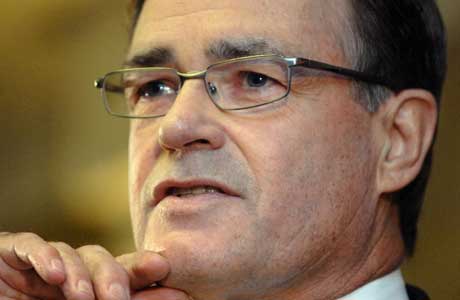
You can read about it here.
I thought the New Democrat response to the polling was fine, given how difficult the numbers are for them. They know this provincial election is an uphill battle, and they are honest about it. Saying that they want an issues-based campaign is a good way to go - the NDP may be able to boost their turnout on November 7 by drawing attention to issues that are important to voters.
Tuesday, September 13, 2011
A quick glimpse at the coming contest in Moose Jaw North

Moose Jaw North NDP candidate Derek Hassen, image courtesy of the Moose Jaw Times Herald.
This Moose Jaw Times Herald story on the coming contest in Moose Jaw North is worth your time to read. This is just a taste of the type of intense contests that will be underway in about a dozen seats this fall. Be sure to stay tuned to Sask Politics 1 in the days ahead, as we are just days away from launching our series on each of the 58 constituencies where ballots will be cast on November 7th.
Monday, September 12, 2011
When will the Sask Party stumble?
Will Chabun has written a very interesting piece about the future fortunes of the Saskatchewan Party. It is a very curious thing - the Sask Party has enjoyed a steady rise since its inception in 1997. It does not appear that the Sask Party will falter anytime soon. Anyhow, be sure to read on and leave your comments behind!
Sunday, September 11, 2011
Elections Saskatchewan Website Completely Revamped
We are happy to report that the people over at Elections Saskatchewan have completely updated their website.
Finally!! Sorry, but it was fairly unattractive and onerous... not at all a place one would want to send a new or undecided voter, in hopes that they might get excited about politics.
The link for the site has not changed - it is still http://www.elections.sk.ca/ - but the look, feel and functionality has.
On first glance, it appears to be user-friendly and well-done. Bright colours and easy to understand, and follow, links make it a site one might want spend some time in.
This looks like a site that someone put some thought into to make sure it would appeal to 'normal folk' and politicos alike.
Well done!!
Finally!! Sorry, but it was fairly unattractive and onerous... not at all a place one would want to send a new or undecided voter, in hopes that they might get excited about politics.
The link for the site has not changed - it is still http://www.elections.sk.ca/ - but the look, feel and functionality has.
On first glance, it appears to be user-friendly and well-done. Bright colours and easy to understand, and follow, links make it a site one might want spend some time in.
This looks like a site that someone put some thought into to make sure it would appeal to 'normal folk' and politicos alike.
Well done!!
Saturday, September 10, 2011
The recent public opinion poll
The Praxis Analytics polling released this past week is very interesting. It bears repeating the numbers here; Sask Party 63.4%, NDP 26.1%, Liberal 5.9%, Green 3% and 'Others' 1.5%. 800 folks were sampled during the last week of August and the first week of September.
The implications of these results should be obvious to anyone with a functioning brain. With the Sask Party now polling over 60% provincewide, it now commands most of the free enterprise vote and some of the NDP electoral base too. Brad Wall and the Sask Party have the potential with these numbers to win every one of the 58 seats in the Legislature. This means MLAs like Warren McCall in the fabled NDP stronghold of Regina Elphinstone-Centre are even in the fight of their lives. The NDP will struggle this fall to win any seats at all.
It appears that Brad Wall's popularity is growing,and the hatred of Dwain Lingenfelter is also growing. Wall has played all of moves right, and the province's population and economy both continue to grow hand in hand. Meanwhile 'Link' completely underestimated his Sask Party opponents when he returned to Saskatchewan in 2009, and thought he would cruise back into government easily. It will be most curious to see which of its 20 seats the NDP can hang onto on November 7.
The implications of these results should be obvious to anyone with a functioning brain. With the Sask Party now polling over 60% provincewide, it now commands most of the free enterprise vote and some of the NDP electoral base too. Brad Wall and the Sask Party have the potential with these numbers to win every one of the 58 seats in the Legislature. This means MLAs like Warren McCall in the fabled NDP stronghold of Regina Elphinstone-Centre are even in the fight of their lives. The NDP will struggle this fall to win any seats at all.
It appears that Brad Wall's popularity is growing,and the hatred of Dwain Lingenfelter is also growing. Wall has played all of moves right, and the province's population and economy both continue to grow hand in hand. Meanwhile 'Link' completely underestimated his Sask Party opponents when he returned to Saskatchewan in 2009, and thought he would cruise back into government easily. It will be most curious to see which of its 20 seats the NDP can hang onto on November 7.
Friday, September 9, 2011
The Enumerators Are Out
Having just completed our enumeration I thought I'd let people know about a few things that may be helpful for some households.
First, all voters will be required to produce identification at the poll, providing proof of name, and physical address. More information on this can be found at www.elections.sk.ca
Advance Polls will be held:
Tuesday, November 1st through Friday, November 4th, 2011
from 3 p.m. to 10 p.m. CST.
And on Saturday, November 5th, 2011
from 12 noon until 7 p.m. CST.
Election Day is November 7th.
Again, further information on this is available at www.elections.sk.ca
In my home, it is likely at least one of us will be away for work during the advance polls and on election day. When I asked about this, I was surprised and happy to be handed an application for a mail in ballot, called Absentee Voter Information form E-127, complete with an envelope to mail it in with. The number to call for information about absentee voting is 1-855-879-8013.
Enumerators are easy to spot. They are wearing neon yellow vests, and come to your door with a clipboard. The process is simple and quick, and the gal doing the job in my area was well-informed and prepared.
This job - done well - makes a big difference to voters, and candidates alike. A big thank you from SaskPolitics1 to those enumerating this time around.
First, all voters will be required to produce identification at the poll, providing proof of name, and physical address. More information on this can be found at www.elections.sk.ca
Advance Polls will be held:
Tuesday, November 1st through Friday, November 4th, 2011
from 3 p.m. to 10 p.m. CST.
And on Saturday, November 5th, 2011
from 12 noon until 7 p.m. CST.
Election Day is November 7th.
Again, further information on this is available at www.elections.sk.ca
In my home, it is likely at least one of us will be away for work during the advance polls and on election day. When I asked about this, I was surprised and happy to be handed an application for a mail in ballot, called Absentee Voter Information form E-127, complete with an envelope to mail it in with. The number to call for information about absentee voting is 1-855-879-8013.
Enumerators are easy to spot. They are wearing neon yellow vests, and come to your door with a clipboard. The process is simple and quick, and the gal doing the job in my area was well-informed and prepared.
This job - done well - makes a big difference to voters, and candidates alike. A big thank you from SaskPolitics1 to those enumerating this time around.
Thursday, September 8, 2011
New provincial election poll
Be sure to check out our new provincial election poll - tell us which party you plan to vote for on November 7, and be sure to tell us why here.
Wednesday, September 7, 2011
More reflection on the shakeup in the Green Party of Saskatchewan
Yesterday's big news about the shakeup within the Green Party of Saskatchewan is very interesting, and merits further analysis. After all, it is not every day that the leader of a political party quits and joins another party.
So what are we to make of Larissa Shasko's departure from Leader of the Green Party? The irony is that Shasko has generated more media attention with her move to Yens Pedersen's NDP campaign in Regina South than she did as Leader of the Greens. One cannot help but wonder what motivated Shasko to make this defection. The timing is very deliberate, obviously timed to sting the Greens as we are now just over 2 months away from voting day. Regardless of whether one sees Shasko's defection as a betrayal or a smart move, the perception that this move was intended to hurt the Greens is self-evident. It can also be argued that some in the Saskatchewan NDP have come to see the seatless Greens as a threat to their own electoral fortunes this fall. It may very well be that Shasko has now burned her Green bridges behind her. But it may also be that this move sparks a rapid political rise within the NDP with for Shasko, who knows?
The departure of Shasko from the Green Party leadership and the subsequent rise of Victor Lau to that same post places the Greens at an electoral crossroads. While Lau has not achieved an electoral success yet, he is a seasoned political figure in our political culture. Regardless of whether one agrees or disagrees with Lau's political beliefs, it can likely be agreed that Lau is well spoken as a would-be politician and handles himself well. But only time will tell whether the Greens have been handed a setback or an opportunity. We will soon find out one way or another.
So what are we to make of Larissa Shasko's departure from Leader of the Green Party? The irony is that Shasko has generated more media attention with her move to Yens Pedersen's NDP campaign in Regina South than she did as Leader of the Greens. One cannot help but wonder what motivated Shasko to make this defection. The timing is very deliberate, obviously timed to sting the Greens as we are now just over 2 months away from voting day. Regardless of whether one sees Shasko's defection as a betrayal or a smart move, the perception that this move was intended to hurt the Greens is self-evident. It can also be argued that some in the Saskatchewan NDP have come to see the seatless Greens as a threat to their own electoral fortunes this fall. It may very well be that Shasko has now burned her Green bridges behind her. But it may also be that this move sparks a rapid political rise within the NDP with for Shasko, who knows?
The departure of Shasko from the Green Party leadership and the subsequent rise of Victor Lau to that same post places the Greens at an electoral crossroads. While Lau has not achieved an electoral success yet, he is a seasoned political figure in our political culture. Regardless of whether one agrees or disagrees with Lau's political beliefs, it can likely be agreed that Lau is well spoken as a would-be politician and handles himself well. But only time will tell whether the Greens have been handed a setback or an opportunity. We will soon find out one way or another.
Tuesday, September 6, 2011
Greens Have a New Leader
One can never say politics in Saskatchewan is boring. Just like that, things change!
Today, Larrisa Shasko announced she is stepping down as leader of the Green Party in Saskatchewan. Victor Lau, as deputy leader, is now the new leader.
Mr. Lau is the candidate for Regina Douglas Park. The current MLA for this constituency is NDP Leader Dwayne Lingenfelter.
Two provincial party leaders running in the same seat? Of course, more will follow on this.
Today, Larrisa Shasko announced she is stepping down as leader of the Green Party in Saskatchewan. Victor Lau, as deputy leader, is now the new leader.
Mr. Lau is the candidate for Regina Douglas Park. The current MLA for this constituency is NDP Leader Dwayne Lingenfelter.
Two provincial party leaders running in the same seat? Of course, more will follow on this.
And it is on...
The last gorgeous long weekend of summer is over. The Riders won. Labour Day activities were observed and enjoyed. The ads have begun.
In sixty-two days most people in this province will head to their local polling station to cast a ballot.
What can we expect between now and then? Well, lots.
There will be lots of advertising, both prior to and of course after, the official writ period - another month away, by the way.
All candidates, should be on the doors en masse. Those who are truly serious about actually hearing what people have to say, have been at this for quite some time now and some are well on their way to completing follow-up canvases of the constituency they are seeking office in.
We can expect the so-called 'special interest' groups - which isn't really fair, they simply are organizations bringing information forward - to increase the volume, intensity and frequency of their messages as well.
And, we can expect the main provincial campaign between the leaders to ramp up significantly.
What about this site?
This site is geared to be about sanity. A level playing field.
This is the place where busy people will be able to come, to quickly gauge the tones and issues of the day quickly and easily. The twitter feed at the top, direct from the parties, puts all of their words together in one place. The twitter feed along the side - has what others are saying about Saskatchewan Politics at any given moment. Those with no connection to Twitter can still reap its benefits here.
This is the place where people who are wanting to privately learn more about the issues and the parties - young people, the un-engaged - can come to easily find the information they seek. There will be links and pages to help people find candidate websites, Facebook pages, and Twitter feeds (if they so wish), and there are links to Elections Saskatchewan pages and other places where pertinent fact-based information can be found. It is our goal to provide information in such a way, that people who have rarely, or never, voted before will be able to build the confidence and interest to do so privately and at their leisure.
It is our goal, to serve both the busy politico and the learning voter.
Candidates, campaign teams, and active volunteers, this site is here to help you engage voters. When you encounter the people who you sense are tuned out, not just from you, but from the process, offer them an opportunity to explore on their own. Sure, you lose a bit of control over the message, but it is human nature for people to respect the person who shows them respect. Please trust that will count for something.
Also, candidates and campaign teams. As pages go up here linking our visitors through to your contact pages and information, please take a moment and check your links. If there are any changes that need to be made, please email us at saskpolitics1@gmail.com. It is our most sincere desire to present a fair and accurate platform for everyone.
As a final note... Congratulations to each and every person who has opted to put their name forward for election. Many have considered it, but you have done it. You have our most sincere admiration and respect, we hope we serve you well in your quest to ultimately serve others.
Our best wishes to everyone involved. The race is now on.
In sixty-two days most people in this province will head to their local polling station to cast a ballot.
What can we expect between now and then? Well, lots.
There will be lots of advertising, both prior to and of course after, the official writ period - another month away, by the way.
All candidates, should be on the doors en masse. Those who are truly serious about actually hearing what people have to say, have been at this for quite some time now and some are well on their way to completing follow-up canvases of the constituency they are seeking office in.
We can expect the so-called 'special interest' groups - which isn't really fair, they simply are organizations bringing information forward - to increase the volume, intensity and frequency of their messages as well.
And, we can expect the main provincial campaign between the leaders to ramp up significantly.
What about this site?
This site is geared to be about sanity. A level playing field.
This is the place where busy people will be able to come, to quickly gauge the tones and issues of the day quickly and easily. The twitter feed at the top, direct from the parties, puts all of their words together in one place. The twitter feed along the side - has what others are saying about Saskatchewan Politics at any given moment. Those with no connection to Twitter can still reap its benefits here.
This is the place where people who are wanting to privately learn more about the issues and the parties - young people, the un-engaged - can come to easily find the information they seek. There will be links and pages to help people find candidate websites, Facebook pages, and Twitter feeds (if they so wish), and there are links to Elections Saskatchewan pages and other places where pertinent fact-based information can be found. It is our goal to provide information in such a way, that people who have rarely, or never, voted before will be able to build the confidence and interest to do so privately and at their leisure.
It is our goal, to serve both the busy politico and the learning voter.
Candidates, campaign teams, and active volunteers, this site is here to help you engage voters. When you encounter the people who you sense are tuned out, not just from you, but from the process, offer them an opportunity to explore on their own. Sure, you lose a bit of control over the message, but it is human nature for people to respect the person who shows them respect. Please trust that will count for something.
Also, candidates and campaign teams. As pages go up here linking our visitors through to your contact pages and information, please take a moment and check your links. If there are any changes that need to be made, please email us at saskpolitics1@gmail.com. It is our most sincere desire to present a fair and accurate platform for everyone.
As a final note... Congratulations to each and every person who has opted to put their name forward for election. Many have considered it, but you have done it. You have our most sincere admiration and respect, we hope we serve you well in your quest to ultimately serve others.
Our best wishes to everyone involved. The race is now on.
Monday, September 5, 2011
Happy Labour Day everyone
We at Sask Politics 1 would like to take a moment to wish everyone a Happy Labour Day. This is a day when all working people in the province have the opportunity to take a break and take stock of their working lives. This year, Labour Day has added importance in Saskatchewan. It is very likely that with a fixed election date of November 7, the provincial election campaign will unofficially begin tomorrow. The election writ will not be dropped until the end of September, but the parties are expected to release their full advertising blitz and intense on-the-ground campaigning from this week onward. Please be sure to check this website every day during the provincial election campaign for new and up-to-date information on the election campaign as it unfolds.
Sunday, September 4, 2011
Will voter apathy drive down turnout on November 7?
Will voter apathy drive down voter turnout on November 7? It is tempting to say yes and leave it at that. Certainly voter apathy will arguably be the greatest challenge Premier Brad Wall faces in the election campaign this fall. The onus is on the Premier to motivate his own supporters to not take the outcome this November as a foregone conclusion and get them to vote. In the face of overwhelming odds, Dwain Lingenfelter and the Saskatchewan NDP face a similar task. However, fear of annihilation at the polls may actually motivate New Democrats to get out and work for the party, Link or no Link.
Thus the challenge facing Premier Wall is potentially more elusive. Or maybe not. Being the Premier of Saskatchewan, Wall can potentially provide incentives for party members to work this fall, with promises of jobs, board appointments and the like. Given his powerful orator abilities, it may also be that Wall can fire up his supporters with great speeches. Whatever the case, it is up to the Premier and his key people to ensure that Sask Party members are highly motivated to work hard and ensure a landslide election win.
Thus the challenge facing Premier Wall is potentially more elusive. Or maybe not. Being the Premier of Saskatchewan, Wall can potentially provide incentives for party members to work this fall, with promises of jobs, board appointments and the like. Given his powerful orator abilities, it may also be that Wall can fire up his supporters with great speeches. Whatever the case, it is up to the Premier and his key people to ensure that Sask Party members are highly motivated to work hard and ensure a landslide election win.
Saturday, September 3, 2011
Will there be any surprises on election night?
The question being posed here is, will there be any surprises in the election results on November 7? Of course there will be - there are always surprises in election results! However the outcome of the 2011 election has been confidently predicted by political pundits years in advance - this means that we are guaranteed to see at least one surprise on November 7!
So what might this surprise be? The conventional wisdom is that the Saskatchewan Party will gain seats at the expense of the NDP as it cruises to a second term. Given the consistent public polling results that have been released in recent years, it is unlikely that this conventional wisdom will not come to pass.
Therefore the coming surprises may have something to do with the magnitude of the Saskatchewan Party's victory and the scope of defeat for the Saskatchewan NDP. Therefore two possibilities emerge - either the Sask Party could gain more seats and the NDP could lose more seats than expected, or the Sask Party could gain fewer eats and the NDP could lose fewer seats than expected. Unless there is a dramatic shift in opinion before November 7, we are unlikely to see the NDP build on the 20 seats that they currently hold in the Legislature. But this doesn't mean that the NDP can't defeat any incumbent Sask Party MLAs.
There are 3 seats where Sask Party MLAs are vulnerable to NDP victories this fall. The margins of victory for Darryl Hickie in Prince Albert Carlton, Warren Michelson in Moose Jaw North and Jeremy Harrison in Meadow Lake were all within 100 votes last time. If you add the votes that the Liberal candidates in those constituencies received in 2007 to the Sask Party total, the pluralities of victory for Hickie, Michelson and Harrison grow to 660 votes, 236 votes and 431 votes respectively. Of the 3, it appears that Harrison is the most vulnerable to a surprise NDP win, since a plurality of 236 votes is not an insurmountable lead. However, at this point there is provincewide momentum for the Saskatchewan Party, and likely many new voters in these ridings who are originally from out-of-province. Thus the challenge for the Sask Party and the Sask NDP will be command momentum in this marginal ridings and to deliver enough identified supporters to the polls to ensure a victory. Who ever said Saskatchewan politics is boring?!
So what might this surprise be? The conventional wisdom is that the Saskatchewan Party will gain seats at the expense of the NDP as it cruises to a second term. Given the consistent public polling results that have been released in recent years, it is unlikely that this conventional wisdom will not come to pass.
Therefore the coming surprises may have something to do with the magnitude of the Saskatchewan Party's victory and the scope of defeat for the Saskatchewan NDP. Therefore two possibilities emerge - either the Sask Party could gain more seats and the NDP could lose more seats than expected, or the Sask Party could gain fewer eats and the NDP could lose fewer seats than expected. Unless there is a dramatic shift in opinion before November 7, we are unlikely to see the NDP build on the 20 seats that they currently hold in the Legislature. But this doesn't mean that the NDP can't defeat any incumbent Sask Party MLAs.
There are 3 seats where Sask Party MLAs are vulnerable to NDP victories this fall. The margins of victory for Darryl Hickie in Prince Albert Carlton, Warren Michelson in Moose Jaw North and Jeremy Harrison in Meadow Lake were all within 100 votes last time. If you add the votes that the Liberal candidates in those constituencies received in 2007 to the Sask Party total, the pluralities of victory for Hickie, Michelson and Harrison grow to 660 votes, 236 votes and 431 votes respectively. Of the 3, it appears that Harrison is the most vulnerable to a surprise NDP win, since a plurality of 236 votes is not an insurmountable lead. However, at this point there is provincewide momentum for the Saskatchewan Party, and likely many new voters in these ridings who are originally from out-of-province. Thus the challenge for the Sask Party and the Sask NDP will be command momentum in this marginal ridings and to deliver enough identified supporters to the polls to ensure a victory. Who ever said Saskatchewan politics is boring?!
Friday, September 2, 2011
What is the new bellwether constituency in Saskatchewan politics?
A bellwether constituency has the unique quality of almost always ending up on the government side of the Legislature in a provincial election. From 1912 until 1999 the traditional bellwether constituency in Saskatchewan provincial politics was the Last Mountain-Touchwood seat. This constituency elected government MLAs in the overwhelming number of provincial elections during this period, with the noted exceptions of 1908, 1929 and 1938. In 1908 Thomas Anderson was elected as the MLA for Last Mountain for the Provincial Rights party, and Jake Benson of Semans won this seat as a Progressive in 1929 and for the CCF in 1938.
However the bellwether tradition in Last Mountain-Touchwood abruptly ended in recent times. Glen Hart was elected in 1999 and re-elected in 2003 for the opposition Saskatchewan Party. So the question should be posed - is there a new bellwether constituency in Saskatchewan politics? The answer to that question is a cautious and preliminary yes.
After a careful analysis of Saskatchewan's current 58 constituencies, it appears there is a worthy candidate for being the new bellwether riding in Saskatchewan politics. That constituency is none other than Regina Wascana Plains, whose current MLA is Christine Tell with the Saskatchewan Party. Tell won this seat for the Saskatchewan Party in 2007, and as the Sask Party looks certain to win a second term this fall, the word on the ground is that Tell is a safe bet to be re-elected in Regina Wascana Plains.
But this constituency bears somewhat closer scrutiny, just to make sure it cuts the bellwether mustard. The riding now called Regina Wascana Plains first came into being in 1967 and was won at that time by Henry Baker, the long-time Mayor of Regina. Baker was a CCF candidate and the election was won by the Liberals. Baker was re-elected in 1971 as an NDP candidate and the election was won by Allan Blakeney and the NDP. In 1975 the seat was changed to Regina Wascana and it was won by Tony Merchant of the Liberals, though the Blakeney Government was re-elected. But in 1978 Clinton White of the NDP won this seat, and in every provincial election since 1978, the constituency has consistently been on the government side of the Legislature. In 1982 Gord Currie of the Tories won this seat, followed by PC candidate Beattie Martin in 1986, and Doreen Hamilton of the NDP in 1991, 1995, 1999 and 2003.
However the bellwether tradition in Last Mountain-Touchwood abruptly ended in recent times. Glen Hart was elected in 1999 and re-elected in 2003 for the opposition Saskatchewan Party. So the question should be posed - is there a new bellwether constituency in Saskatchewan politics? The answer to that question is a cautious and preliminary yes.
After a careful analysis of Saskatchewan's current 58 constituencies, it appears there is a worthy candidate for being the new bellwether riding in Saskatchewan politics. That constituency is none other than Regina Wascana Plains, whose current MLA is Christine Tell with the Saskatchewan Party. Tell won this seat for the Saskatchewan Party in 2007, and as the Sask Party looks certain to win a second term this fall, the word on the ground is that Tell is a safe bet to be re-elected in Regina Wascana Plains.
But this constituency bears somewhat closer scrutiny, just to make sure it cuts the bellwether mustard. The riding now called Regina Wascana Plains first came into being in 1967 and was won at that time by Henry Baker, the long-time Mayor of Regina. Baker was a CCF candidate and the election was won by the Liberals. Baker was re-elected in 1971 as an NDP candidate and the election was won by Allan Blakeney and the NDP. In 1975 the seat was changed to Regina Wascana and it was won by Tony Merchant of the Liberals, though the Blakeney Government was re-elected. But in 1978 Clinton White of the NDP won this seat, and in every provincial election since 1978, the constituency has consistently been on the government side of the Legislature. In 1982 Gord Currie of the Tories won this seat, followed by PC candidate Beattie Martin in 1986, and Doreen Hamilton of the NDP in 1991, 1995, 1999 and 2003.
Thursday, September 1, 2011
Saskatchewan's new November election tradition
With the rise of fixed provincial election dates in Saskatchewan, our province now has a new political tradition of November election dates. This is a fairly recent development; the previous two provincial elections in 2003 and 2007 happened in November. And as we all know, this year's election will be held on November 7.
There used to be a strong tradition of holding provincial elections in Saskatchewan in the month of June. The first June election in Saskatchewan was in 1917. This was followed by June provincial elections in 1921, 1925, 1929, 1934, 1938, 1944, 1948, 1952, 1956 and 1960. But since 1960 June elections have become a more rare event, with the only June elections in the past 50 years being in 1971, 1975 and 1995.
The reasoning for June elections in Saskatchewan was fairly straightforward - the weather was guaranteed to be reasonable for voter turnout, and it is a time of year when optimism usually runs fairly high. In analyzing the outcomes of June elections in Saskatchewan, the incumbent government has always been re-elected with two major exceptions - 1944 and 1971. In those elections the opposition NDP rode a wave of voter discontent to power over incumbent Liberal governments.
Now we are into a period in Saskatchewan political history where November elections are going to be the norm. So what is the rational for November election dates? It can't be based on weather - any election date beyond October 1 always runs the risk of running into the onset of winter. Winter weather likely drives down voter turnout. Therefore the inclination toward November elections probably has something more to do with voter psychology. Just think about it - November can be a cold, windy month. Often there is snow on the ground, but even if there is no snow yet in November, the landscape across the province is barren after harvest and non-evergreen trees have shed their leaves. Thus it is a time of year when voters are less likely to want to vote for change - and therefore would be more inclined to re-elect the incumbent government. In plan English, November is not a time when Saskatchewan voters are conditioned to vote for change.
However, voters in 2007 did opt for change, from Lorne Calvert and the NDP to Brad Wall and the Saskatchewan Party. However, the Sask Party did not run the typical negative campaign that one would expect of an opposition party. In the 2007 election, Wall and the Sask Party went out of their way to say this was going to be a positive change, where hope beats fear. That message resonated with voters and helped push the Saskatchewan Party over the top in some close urban battles.
There used to be a strong tradition of holding provincial elections in Saskatchewan in the month of June. The first June election in Saskatchewan was in 1917. This was followed by June provincial elections in 1921, 1925, 1929, 1934, 1938, 1944, 1948, 1952, 1956 and 1960. But since 1960 June elections have become a more rare event, with the only June elections in the past 50 years being in 1971, 1975 and 1995.
The reasoning for June elections in Saskatchewan was fairly straightforward - the weather was guaranteed to be reasonable for voter turnout, and it is a time of year when optimism usually runs fairly high. In analyzing the outcomes of June elections in Saskatchewan, the incumbent government has always been re-elected with two major exceptions - 1944 and 1971. In those elections the opposition NDP rode a wave of voter discontent to power over incumbent Liberal governments.
Now we are into a period in Saskatchewan political history where November elections are going to be the norm. So what is the rational for November election dates? It can't be based on weather - any election date beyond October 1 always runs the risk of running into the onset of winter. Winter weather likely drives down voter turnout. Therefore the inclination toward November elections probably has something more to do with voter psychology. Just think about it - November can be a cold, windy month. Often there is snow on the ground, but even if there is no snow yet in November, the landscape across the province is barren after harvest and non-evergreen trees have shed their leaves. Thus it is a time of year when voters are less likely to want to vote for change - and therefore would be more inclined to re-elect the incumbent government. In plan English, November is not a time when Saskatchewan voters are conditioned to vote for change.
However, voters in 2007 did opt for change, from Lorne Calvert and the NDP to Brad Wall and the Saskatchewan Party. However, the Sask Party did not run the typical negative campaign that one would expect of an opposition party. In the 2007 election, Wall and the Sask Party went out of their way to say this was going to be a positive change, where hope beats fear. That message resonated with voters and helped push the Saskatchewan Party over the top in some close urban battles.
Wednesday, August 31, 2011
Priming the Pump for November 7, Part 7 - the Western Independence Party
This is the final installment in the Priming the Pump series in lead up to the November 7 provincial election in Saskatchewan. Today we look at the Western Independence Party of Saskatchewan or WIP.
The WIP is not the first Western Canadian separatist party in this province. The forerunner to the WIP was the Western Canada Concept or WCC party that contested the 1982 and 1986 provincial elections. The WCC fielded candidates in most constituencies in 1982 but failed to elect anyone. However many WCC candidates did finish third ahead of the Liberals. The party's strongest showing was in the rural seats south of the Trans Canada Highway; the WCC wave began about mid-election on the eastern side of the province, swept west to the Alberta border and began to fizzle out by election day. Thus the party's best showings were in the southwest rural seats, where 2 New Democrat MLAs managed to survive the 'Monday Night Massacre'.
In February 1986 two renegade PC MLAs joined the WCC, Bill Sveinson and Lloyd Hampton. Sveinson bolted from the PC party in 1983 and joined the Liberals. But in 1985 Sveinson was booted from the Liberals and convinced Hampton to join him in the WCC. Thus for a time the WCC was the Third Party in the Legislature. There was a controversy within the WCC at the time, since the Party Leader welcomed the new MLAs while the Party President did not. However both MLAs were shown the door before the next provincial election. Shortly after 1986 the WCC faded from the Saskatchewan political scene.
The WIP does not appear to share anything in common with the WCC, other than they both advocate the formation of a new nation in Western Canada. In fact the WIP has passed a resolution that supports the State of Israel to deliberately separate itself from the WCC. The WIP was formed on July 12, 2003 and ran 17 candidates in the subsequent election. None of the candidates were elected and the party 0.64% of the provincial vote. Just 8 candidates were chosen for the 2007 election and again no MLAs were elected.
The newest Leader of the WIP is Dana Arnason, and he will be running in the Biggar constituency this fall. It is not clear yet how many other candidates the party will run. At the present time there is no polling that has been done to indicate what kind of support there would be for the Western separation in Saskatchewan at this time. The WIP does not show up in public opinion polling so it is unlikely the party will make a big splash this fall. This party's identity is tied to the issue of Western separation and it is not an issue that is currently on the public radar screen. However if a future government in Ottawa were to make a move that alienates Westerners, support for a party like the WIP in Saskatchewan could explode overnight. The potential for a powerful Western Separatist movement in this part of the world always ripples just under the surface; it is always one insult from Ottawa away. However for now it appears such a movement lies dormant. At this point it appears unlikely that the Western-based Conservative government in Ottawa will come to alienate Westerners in the same way that the federal Liberals did.
The WIP is not the first Western Canadian separatist party in this province. The forerunner to the WIP was the Western Canada Concept or WCC party that contested the 1982 and 1986 provincial elections. The WCC fielded candidates in most constituencies in 1982 but failed to elect anyone. However many WCC candidates did finish third ahead of the Liberals. The party's strongest showing was in the rural seats south of the Trans Canada Highway; the WCC wave began about mid-election on the eastern side of the province, swept west to the Alberta border and began to fizzle out by election day. Thus the party's best showings were in the southwest rural seats, where 2 New Democrat MLAs managed to survive the 'Monday Night Massacre'.
In February 1986 two renegade PC MLAs joined the WCC, Bill Sveinson and Lloyd Hampton. Sveinson bolted from the PC party in 1983 and joined the Liberals. But in 1985 Sveinson was booted from the Liberals and convinced Hampton to join him in the WCC. Thus for a time the WCC was the Third Party in the Legislature. There was a controversy within the WCC at the time, since the Party Leader welcomed the new MLAs while the Party President did not. However both MLAs were shown the door before the next provincial election. Shortly after 1986 the WCC faded from the Saskatchewan political scene.
The WIP does not appear to share anything in common with the WCC, other than they both advocate the formation of a new nation in Western Canada. In fact the WIP has passed a resolution that supports the State of Israel to deliberately separate itself from the WCC. The WIP was formed on July 12, 2003 and ran 17 candidates in the subsequent election. None of the candidates were elected and the party 0.64% of the provincial vote. Just 8 candidates were chosen for the 2007 election and again no MLAs were elected.
The newest Leader of the WIP is Dana Arnason, and he will be running in the Biggar constituency this fall. It is not clear yet how many other candidates the party will run. At the present time there is no polling that has been done to indicate what kind of support there would be for the Western separation in Saskatchewan at this time. The WIP does not show up in public opinion polling so it is unlikely the party will make a big splash this fall. This party's identity is tied to the issue of Western separation and it is not an issue that is currently on the public radar screen. However if a future government in Ottawa were to make a move that alienates Westerners, support for a party like the WIP in Saskatchewan could explode overnight. The potential for a powerful Western Separatist movement in this part of the world always ripples just under the surface; it is always one insult from Ottawa away. However for now it appears such a movement lies dormant. At this point it appears unlikely that the Western-based Conservative government in Ottawa will come to alienate Westerners in the same way that the federal Liberals did.
Tuesday, August 30, 2011
Priming the Pump for November 7, Part 6 - the PC Party
Today is Part 6 of the short 'Priming the Pump' series in lead up to the November 7 provincial election in Saskatchewan. In the second last of the series we look today at the PC Party of Saskatchewan.
The Progressive Conservatives are Saskatchewan's second oldest political party. It first appeared on ballots in the 1912 election, having emerged from the Provincial Rights party. Today the PCs are a mere shadow of their former selves in recent times. 25 years ago the Tories were in government; today they are a fringe party.
The Tories struggled for most of Saskatchewan's early history, continually placing a distant second to the Liberals. In 1929 the Liberals were forced into a minority result and the Conservatives under James Anderson formed a coalition government with 6 Progressive MLAs and 5 Independents. But a dark cloud hung over this government, as it was alleged the Ku Klux Klan was behind the rise of the Tories. By 1934 every member of the Anderson government was defeated. 1934 marked the start of a long dry spell for the party in Saskatchewan, and not elect a single MLA for the next 5 provincial elections.
In 1964 a single Progressive Conservative was elected to the Legislature, and the party managed to secure 18 percent of the provincial vote. The MLA was party leader Martin Pederson of Hawarden, the member for Arm River. Herman Danielson had been the Liberal MLA for Arm River since 1934, but Pederson defeated him. It was the same election that saw the Liberals return to power in Saskatchewan under the leadership of Ross Thatcher.
However Pederson was defeated in 1967, and the PCs also returned to the margins. By 1971 the party fielded only 16 candidates and garnered just 2 percent of votes provincewide. But in 1973 the PCs merged with the Social Credit party, and Dick Collver beat Lloyd Avram in a leadership race. In hindsight 1973 proved to be a pivotal year for the PCs. Collver had been a fundraiser for the Saskatchewan Liberals, but became alienated after the Thatcher Government adopted user fees for visits to doctors. Collver spent the next 2 years traveling the province to build the PC party from scratch. By 1975 Collver's hard work had paid off with the election of 7 MLAs and the capturing of 28 percent of the vote. By 1978 the PCs were tied with the Liberals in the Legislature at 11 MLAs each and in the provincial election that year the Tories finally replaced the Liberals as the main opposition to the NDP by winning 17 seats - the Liberals were left seatless. Collver stepped down as leader in 1979 to lead the Unionest party, and was replaced by Grant Devine, a U of S professor in Agricultural Economics.
The Tories under Devine went on to win a historic landslide win in 1982 now called the 'Monday Night Massacre'. It was an event that changed Saskatchewan political history. The first term of the Devine Government provided relatively 'good' government to the province. But the second term that began after 1986 resulted in near disaster. Today it is widely agreed upon that the second term of the Devine Government was one of the worst governments in Canadian history. The Tories massively overspent while in power, to the point where the annual budget deficit was on average about $1-billion per year. The result was that by the time the PCs were defeated in 1991, the province ended up with a $16-billion debt and the public treasury was teetering on the brink of default.
The PC party went into sharp decline after 1991 election due to some unforeseen events. Revelations of scandal and malfeasance overwhelmed any hope the party had of rebuilding, with several former MLA and paid staff being sent to prison for fraud. By 1995 the party was in a struggle for survival. A young farmer from Eston named Bill Boyd had been elected MLA in 1991 in the Kindersley constituency. Boyd became leader of the party in 1994, and embarked on a historic mission to save the party's remaining MLAs. Boyd's strategy paid off - while the PCs were reduced to third place in the 1995 election, the party salvaged 5 of its 10 seats. Two years later 4 of those MLAs including Boyd joined with 4 Liberals MLAs to form the Saskatchewan Party in a news conference in the Blue Lounge at the Hotel Saskatchewan on August 8, 1997.
In October 1997, party members made a sombre gathering at the Regina Inn and made the heartwrenching decision to put the party into suspended animation. It was agreed that the party would sit out the next 2 provincial elections and that a special board of trustees would administer the Regina PC Metro Trust Fund. After the 2003 provincial election the PC party came out of hibernation and former MLA and cabinet minister Rick Swenson became the new party leader. Since that time the PCs have run a handful of candidates in the 2007 provincial election and contested the Saskatoon Northwest by-election last fall, but the party's results were unimpressive in both contests. So far the party has nominated candidates in the 2 Moose Jaw constituencies, including Swenson in Moose Jaw North. The party's efforts at rebuilding are hamstrung by an ongoing court case with the Saskatchewan Party over control of the PC Trust Fund. The outcome of that court case may determine the future fortunes of the Tory party. At the same time, it is not clear if the legacy of the Devine Government will hobble a potential rebuilding of the PC Party in the future; in time memory of that government's infamy may fade. But for the time being the Tories are small fry in the grand pond of Saskatchewan politics.
The Progressive Conservatives are Saskatchewan's second oldest political party. It first appeared on ballots in the 1912 election, having emerged from the Provincial Rights party. Today the PCs are a mere shadow of their former selves in recent times. 25 years ago the Tories were in government; today they are a fringe party.
The Tories struggled for most of Saskatchewan's early history, continually placing a distant second to the Liberals. In 1929 the Liberals were forced into a minority result and the Conservatives under James Anderson formed a coalition government with 6 Progressive MLAs and 5 Independents. But a dark cloud hung over this government, as it was alleged the Ku Klux Klan was behind the rise of the Tories. By 1934 every member of the Anderson government was defeated. 1934 marked the start of a long dry spell for the party in Saskatchewan, and not elect a single MLA for the next 5 provincial elections.
In 1964 a single Progressive Conservative was elected to the Legislature, and the party managed to secure 18 percent of the provincial vote. The MLA was party leader Martin Pederson of Hawarden, the member for Arm River. Herman Danielson had been the Liberal MLA for Arm River since 1934, but Pederson defeated him. It was the same election that saw the Liberals return to power in Saskatchewan under the leadership of Ross Thatcher.
However Pederson was defeated in 1967, and the PCs also returned to the margins. By 1971 the party fielded only 16 candidates and garnered just 2 percent of votes provincewide. But in 1973 the PCs merged with the Social Credit party, and Dick Collver beat Lloyd Avram in a leadership race. In hindsight 1973 proved to be a pivotal year for the PCs. Collver had been a fundraiser for the Saskatchewan Liberals, but became alienated after the Thatcher Government adopted user fees for visits to doctors. Collver spent the next 2 years traveling the province to build the PC party from scratch. By 1975 Collver's hard work had paid off with the election of 7 MLAs and the capturing of 28 percent of the vote. By 1978 the PCs were tied with the Liberals in the Legislature at 11 MLAs each and in the provincial election that year the Tories finally replaced the Liberals as the main opposition to the NDP by winning 17 seats - the Liberals were left seatless. Collver stepped down as leader in 1979 to lead the Unionest party, and was replaced by Grant Devine, a U of S professor in Agricultural Economics.
The Tories under Devine went on to win a historic landslide win in 1982 now called the 'Monday Night Massacre'. It was an event that changed Saskatchewan political history. The first term of the Devine Government provided relatively 'good' government to the province. But the second term that began after 1986 resulted in near disaster. Today it is widely agreed upon that the second term of the Devine Government was one of the worst governments in Canadian history. The Tories massively overspent while in power, to the point where the annual budget deficit was on average about $1-billion per year. The result was that by the time the PCs were defeated in 1991, the province ended up with a $16-billion debt and the public treasury was teetering on the brink of default.
The PC party went into sharp decline after 1991 election due to some unforeseen events. Revelations of scandal and malfeasance overwhelmed any hope the party had of rebuilding, with several former MLA and paid staff being sent to prison for fraud. By 1995 the party was in a struggle for survival. A young farmer from Eston named Bill Boyd had been elected MLA in 1991 in the Kindersley constituency. Boyd became leader of the party in 1994, and embarked on a historic mission to save the party's remaining MLAs. Boyd's strategy paid off - while the PCs were reduced to third place in the 1995 election, the party salvaged 5 of its 10 seats. Two years later 4 of those MLAs including Boyd joined with 4 Liberals MLAs to form the Saskatchewan Party in a news conference in the Blue Lounge at the Hotel Saskatchewan on August 8, 1997.
In October 1997, party members made a sombre gathering at the Regina Inn and made the heartwrenching decision to put the party into suspended animation. It was agreed that the party would sit out the next 2 provincial elections and that a special board of trustees would administer the Regina PC Metro Trust Fund. After the 2003 provincial election the PC party came out of hibernation and former MLA and cabinet minister Rick Swenson became the new party leader. Since that time the PCs have run a handful of candidates in the 2007 provincial election and contested the Saskatoon Northwest by-election last fall, but the party's results were unimpressive in both contests. So far the party has nominated candidates in the 2 Moose Jaw constituencies, including Swenson in Moose Jaw North. The party's efforts at rebuilding are hamstrung by an ongoing court case with the Saskatchewan Party over control of the PC Trust Fund. The outcome of that court case may determine the future fortunes of the Tory party. At the same time, it is not clear if the legacy of the Devine Government will hobble a potential rebuilding of the PC Party in the future; in time memory of that government's infamy may fade. But for the time being the Tories are small fry in the grand pond of Saskatchewan politics.
Monday, August 29, 2011
Priming the Pump for November 7 Part 5 - the Greens
Our series on 'Priming the Pump' or setting the stage for our coverage of the 2011 provincial election on November 7 continues with an installment on the Green Party of Saskatchewan.
Compared to other political parties in the province, the Greens have a relatively new history in this province. The forerunner of the Green Party of Saskatchewan was the New Green Alliance, founded on Earth day in Regina in 1998. The founders of the party had been meeting for some time; many of the individuals were former New Democrats who had grown extremely disenchanted with the Romanow Government. 1998 was in the middle of the Romanow Government's second term, and the unhappiness among left-wing political activists with the NDP had reached a boil. The first election run for the NGA was not that impressive - they fielded 16 candidates but won 1 percent of the vote. In 2003 the Greens fielded 27 candidates but only got 0.5% of the vote. In 2007 the rechristened Green Party of Saskatchewan ran 48 out of 58 candidates and managed to secure 2 percent of the vote.
The party was going nowhere for the first few years of its existence. That all appeared to change with the arrival of Sandra Finley in the party's leadership. Finley became leader in 2006 and started a major organizational drive within the party that resulted in a near full slate of candidates for the party. Finley left the leadership to face a court challenge regarding the Canadian census. Finley refused to fill out the long-form census in 2006 - she ended up being convicted but served no jail time.
There are signs that the organizational push from 2007 has grown within the Green Party. The party is currently about 15 candidates short of a full slate, and actual nomination meetings were held to install several of the candidates. In the past all Green candidates were simply appointed due to a lack of on-the-ground organization for the Greens. And according to Facebook some of the Regina candidates are holding fundraising events in lead up to the election. No such events were held in the past. So for the first time, the Green Party of Saskatchewan is starting to take the form of a bonafide political party and not a small rabble of fringe protestors.
It also appears that by the time voters cast their ballots on November 7, the Saskatchewan Greens may become the province's new third party based on total ballots cast. As mentioned before the party could end up running a full slate of candidates this time, with many of the candidates running actually on-the-ground campaigns and not merely being parachute candidates. It was also revealed last week that the Saskatchewan Liberals only plan to run about 15 candidates this fall. Thus the Greens have an opportunity to move up the province's political food chain, at least in rankings.
However, many significant obstacles stand in the party's way. The Greens lack a strong media presence; they appear in the news sporadically, and usually focus on issues of narrow or marginal importance like opposition to nuclear energy. The party's constitution is also flawed in that it contains provision for the annual election of a new leader. Thus it has been very difficult for any of the party's leaders to establish a presence or make any real progress in building the party. Until recently the Greens lacked individuals with organizational drive and fundraising experience. And the collective wisdom of the party's decision makers is at best befuddled and at worst incompetent, given the recent decision to allow Brendan Cross to become a prospective candidate for the party in Regina Rosemont.
With the enormous unpopularity of Dwain Lingenfelter and the Saskatchewan NDP heading into this election, the Greens could make some substantial gains in this election. However to fully capitalize on the situation the Greens will need to run a full slate of candidates, and the party's decision makers need to learn how non-members perceive their party and the decisions they make. If the wind is truly in the party's sails, perhaps they could get 5 percent of the vote this time.
Compared to other political parties in the province, the Greens have a relatively new history in this province. The forerunner of the Green Party of Saskatchewan was the New Green Alliance, founded on Earth day in Regina in 1998. The founders of the party had been meeting for some time; many of the individuals were former New Democrats who had grown extremely disenchanted with the Romanow Government. 1998 was in the middle of the Romanow Government's second term, and the unhappiness among left-wing political activists with the NDP had reached a boil. The first election run for the NGA was not that impressive - they fielded 16 candidates but won 1 percent of the vote. In 2003 the Greens fielded 27 candidates but only got 0.5% of the vote. In 2007 the rechristened Green Party of Saskatchewan ran 48 out of 58 candidates and managed to secure 2 percent of the vote.
The party was going nowhere for the first few years of its existence. That all appeared to change with the arrival of Sandra Finley in the party's leadership. Finley became leader in 2006 and started a major organizational drive within the party that resulted in a near full slate of candidates for the party. Finley left the leadership to face a court challenge regarding the Canadian census. Finley refused to fill out the long-form census in 2006 - she ended up being convicted but served no jail time.
There are signs that the organizational push from 2007 has grown within the Green Party. The party is currently about 15 candidates short of a full slate, and actual nomination meetings were held to install several of the candidates. In the past all Green candidates were simply appointed due to a lack of on-the-ground organization for the Greens. And according to Facebook some of the Regina candidates are holding fundraising events in lead up to the election. No such events were held in the past. So for the first time, the Green Party of Saskatchewan is starting to take the form of a bonafide political party and not a small rabble of fringe protestors.
It also appears that by the time voters cast their ballots on November 7, the Saskatchewan Greens may become the province's new third party based on total ballots cast. As mentioned before the party could end up running a full slate of candidates this time, with many of the candidates running actually on-the-ground campaigns and not merely being parachute candidates. It was also revealed last week that the Saskatchewan Liberals only plan to run about 15 candidates this fall. Thus the Greens have an opportunity to move up the province's political food chain, at least in rankings.
However, many significant obstacles stand in the party's way. The Greens lack a strong media presence; they appear in the news sporadically, and usually focus on issues of narrow or marginal importance like opposition to nuclear energy. The party's constitution is also flawed in that it contains provision for the annual election of a new leader. Thus it has been very difficult for any of the party's leaders to establish a presence or make any real progress in building the party. Until recently the Greens lacked individuals with organizational drive and fundraising experience. And the collective wisdom of the party's decision makers is at best befuddled and at worst incompetent, given the recent decision to allow Brendan Cross to become a prospective candidate for the party in Regina Rosemont.
With the enormous unpopularity of Dwain Lingenfelter and the Saskatchewan NDP heading into this election, the Greens could make some substantial gains in this election. However to fully capitalize on the situation the Greens will need to run a full slate of candidates, and the party's decision makers need to learn how non-members perceive their party and the decisions they make. If the wind is truly in the party's sails, perhaps they could get 5 percent of the vote this time.
Sunday, August 28, 2011
As a nation, we did good
It began with not entirely unexpected, but shocking nonetheless, news. The Honourable Jack Layton had died. And so began a week in which Canadians coast to coast to coast – without distinction or boundary or disagreement – walked the talk.
It was the week when people from every stripe and bent, colour and creed, religion and spiritual bias, and every other difference that separates us, come together to walk the talk about what we preach it is to be a Canadian. Everything we fight for and against, was included, respected, celebrated and honoured.
We as Canadians often talk about being inclusive, compassionate and caring, but for a few days at the tail end of the lazy days of summer 2011, we actually were. Sure there were a few exceptions, but swiftly and convincingly, those exceptions were muted. This was not the time. And so for a brief moment we as a nation embraced and celebrated the very best of who we claim to be.
Sure, there was the distinct group cringe from many when Stephen Lewis used the word manifesto in his eulogy – it is fair to say that Jack got a well-deserved last laugh on that one - but even those ‘fighting words’ couldn’t dampen the spirit of the moment. Prime ministers and premiers – leaders and the so-called ‘regular folk’ alike – applauded, cried, laughed, mourned and danced. Yes, danced.
As Canadians we can and should be proud: we did a good job of honouring and celebrating someone who - regardless of whether we agreed with his politics - showed us all that being involved in things outside ourselves can and does make a difference.
Of course, life has already moved on. And soon, the business of politics and taking sides will return. But, for a moment in time, we experienced that it is indeed possible to ‘do Canadian’ better than we have in the recent past. May we mark this past week as the one in which the lesson was learned.
We did good.
As a postscript... To all the supporters, friends and family of Jack Layton, please know that so many share Prime Minister Harper’s sentiment - we do hope and pray this week of remembrance and celebration has indeed been a great comfort to you.
It was the week when people from every stripe and bent, colour and creed, religion and spiritual bias, and every other difference that separates us, come together to walk the talk about what we preach it is to be a Canadian. Everything we fight for and against, was included, respected, celebrated and honoured.
We as Canadians often talk about being inclusive, compassionate and caring, but for a few days at the tail end of the lazy days of summer 2011, we actually were. Sure there were a few exceptions, but swiftly and convincingly, those exceptions were muted. This was not the time. And so for a brief moment we as a nation embraced and celebrated the very best of who we claim to be.
Sure, there was the distinct group cringe from many when Stephen Lewis used the word manifesto in his eulogy – it is fair to say that Jack got a well-deserved last laugh on that one - but even those ‘fighting words’ couldn’t dampen the spirit of the moment. Prime ministers and premiers – leaders and the so-called ‘regular folk’ alike – applauded, cried, laughed, mourned and danced. Yes, danced.
As Canadians we can and should be proud: we did a good job of honouring and celebrating someone who - regardless of whether we agreed with his politics - showed us all that being involved in things outside ourselves can and does make a difference.
Of course, life has already moved on. And soon, the business of politics and taking sides will return. But, for a moment in time, we experienced that it is indeed possible to ‘do Canadian’ better than we have in the recent past. May we mark this past week as the one in which the lesson was learned.
We did good.
As a postscript... To all the supporters, friends and family of Jack Layton, please know that so many share Prime Minister Harper’s sentiment - we do hope and pray this week of remembrance and celebration has indeed been a great comfort to you.
Friday, August 26, 2011
A new stadium for Regina
After the proposed Domed Stadium for downtown Regina fell through this past winter, Regina Mayor Pat Fiacco has come up with a new stadium proposal. This time the private sector will be footing 75 percent of the bill for construction costs, though it has not been revealed yet which companies are stepping up to the plate. Public funding will round out the remaining 25 percent. Earlier this week Regina city council unanimously approved the project.
Now that a stadium for downtown Regina is back on the radar screen, people are starting to talk about this issue again, and people on lining up on both sides of the issue. Does a new stadium need to be built in downtown Regina? Many people are still suggesting that the stadium around Taylor Field could renovated at a fraction of cost of a new stadium. There is still the question of whether the province and the federal government are willing to help fund even 25 percent of a stadium.
What do you think? Should a new stadium be built in Regina, yes or no? Why or why not? You tell us!
Now that a stadium for downtown Regina is back on the radar screen, people are starting to talk about this issue again, and people on lining up on both sides of the issue. Does a new stadium need to be built in downtown Regina? Many people are still suggesting that the stadium around Taylor Field could renovated at a fraction of cost of a new stadium. There is still the question of whether the province and the federal government are willing to help fund even 25 percent of a stadium.
What do you think? Should a new stadium be built in Regina, yes or no? Why or why not? You tell us!
A new poll for you to participate in
Sask Politics 1 has a new public opinion poll up! We want to know if you will watch Jack Layton's funeral on TV tomorrow.
Thursday, August 25, 2011
Priming the Pump for November 7, Part 4 - the Liberals
This is the latest installment of a short series to 'prime the pump' or prepare you for our election coverage for the November 7 provincial vote. We expect the campaign to begin in earnest after Labour Day. Today's installment looks at the Saskatchewan Liberal Party.
If you knew nothing about Saskatchewan's political history, you would never believe that the Saskatchewan Liberal Party of today once dominated this province's politics. The party today is but a mere shadow of its former self. It is now hard to believe, but the Saskatchewan Liberal Party was once a dynamic force that created this province. The Liberals established a dynasty that carried the party to victory in the first 9 provincial elections in Saskatchewan - 1905, 1908, 1912, 1917, 1921, 1925, 1929, 1934 and 1938. If you are doubtful, do your own investigating.
So what happened to the Saskatchewan Liberal Party, and why is it relevant to the 2011 provincial election? In order to accurately predict what will happen on November 7, it is necessary to unlock the history of this enigmatic former political powerhouse.
The Saskatchewan Liberal Party was launched on August 16, 1905 as a classical liberal party. From its very inception the party advocated a strong climate for launching and sustaining businesses, personal initiative and personal freedom, all core classical liberal values. These values were very appealing to the waves of immigrants who made their way to this province from across Eastern, Central and Northern Europe. In most instances, these individuals came to Saskatchewan to either escape the chronic poverty and lack of economic opportunity in their homeland, or to escape local tyranny and oppression, or both. Those who fled Russia after the Bolshevik Revolution of 1917 came to especially find the Saskatchewan Liberal Party to their liking.
Five Liberal Premiers took office during this dynasty - Walter Scott, William Martin, Charles Dunning, Jimmy Gardiner,and Bill Patterson. Without going into a lot of detail, it can be said that the economic foundation for the province was laid during this dynasty.
The Liberal grip on power in Saskatchewan ended with the rise of the Great Depression. The double blows of global economic collapse and environmental catastrophe (drought) during the 1930s not only ruined the province's economy, but it broke the spirit of Saskatchewan citizens and robbed them of their dignity. It was a time when farming families came to abandon their farms in the middle of the night rather than face foreclosure. Since money was scarce, a family would make new clothes quite often by cutting holes in jute flour sacks, and then dying them different colours (when possible). It was not uncommon to encounter folks with no shoes, and no food. This trauma left deep scars on the province, and many became convinced that more government involvement in the economy was needed to prevent a similar catastrophe from occurring again. Thus the Saskatchewan CCF came to power in 1944, ending the Saskatchewan Liberal dynasty.
The Liberals would then spend the next 20 years in opposition. It was not until the coming of Ross Thatcher to the leadership of the Liberals on September 20, 1959 at a packed convention in the Trianon Ballroom in downtown Regina, that the party truly began to move forward again. Thatcher had been the CCF MP for Moose Jaw, but left the party on April 22, 1955. Thatcher cited the growing influence of trade unions in the party as his main reason for departure. Thatcher was the owner of a successful hardware store in Moose Jaw, and he used his same personal initiative and entrepreneurial drive to propel the Saskatchewan Liberals back to power on April 22, 1964. The Thatcher years in Saskatchewan were highlighted by a new phase of economic development that saw the rise of the potash industry and a private pulp and paper mill for Prince Albert. However the Thatcher Government made one fatal error in its second term, when it introduced user fees for medical visits. That single issue doomed the Liberal Government in the 1971 election, and the party has not been in power since.
Thatcher died one month after the election, of a massive heart attack at age 53. There have been rumours about the nature of Thatcher's death, but photos of Ross in Dale Eisler's Rumours of Glory biography of Thatcher clearly show his health was failing in the final months of his life. Thatcher's strong commitment to a free enterprise economy as the force that sustained the Saskatchewan Liberal Party went to the grave with him. Thatcher's successors were not interested in classical Liberalism. Thatcher's successors in the 1970s were more interested in following the lead of Pierre Trudeau in Ottawa by aligning liberalism with big and invasive government. This shift did not go unnoticed by provincial Liberal voters, and by 1978 the party was wiped off the province's political map.
The 1980s were lean years for the party, electing just one MLA during the heyday of the Devine Government. That MLA was Ralph Goodale, who quit in 1988 to pursue a career in federal politics. But Goodale failed in his bid to get elected to Ottawa. It was at this time, on April 2, 1989, that a Saskatoon doctor named Lynda Haverstock won the party's leadership at a convention at the Hotel Saskatchewan. Haverstock spent the next 6 years crossing the province and almost single-handedly rebuilt the Liberal Party during this time. By 1995 Haverstock's work had paid off - the party had won 11 seats that year, and she became Leader of the Official Opposition. The PCs had dropped to third place. But on the heels of Haverstock's great achievement, she was overthrown later that year at a convention at the same hotel where she was first elected Leader. Haverstock was given an ultimatum to quit by the caucus, after federal Liberals instigated a failed review of her leadership. From the moment that Haverstock was forced to resign as Leader, the party has been in decline ever since to the present day.
The public beheading of Haverstock as Leader is one of the most disturbing events in Saskatchewan history. Instead of being rewarded for her efforts, Haverstock was punished, and the party has never come to grips with this disaster. Another Saskatoon doctor, Jim Melenchuk was elected party leader in 1996. Less than a year later half of his caucus quit to join the fledgling Saskatchewan Party. Another MLA would defect to the NDP in 1998. In the 1999 election the Liberals dropped to 4 seats. 4 seats turned into 3 when Wood River MLA Glen McPherson quit rather than face a court challenge to the election results in his seat. McPherson won re-election in 1999 by just a single vote. Even if McPherson had survived the court challenge, he was not eager to became part of the disastrous Coalition Government that came 2 weeks after the 1999 election.
3 Liberal MLAs, including Melenchuk, joined the minority NDP in government for the next 4 years. The move completely alienated the classical liberal core of the Saskatchewan Liberal Party. This was a major contributing factor to the party being wiped off political map in 2003. The other majority contributing factor was the further blurring of the party's identity by new leader David Karwacki. One of the key ingredients of past success of the Saskatchewan Liberal party had been its being distanced as much as possible from the federal Liberals. But instead Karwacki chose to align the provincial party's policies with those of the federal party, and he even went so far as to endorse the very left-wing Stephane Dion in the 2006 federal leadership race. Thus the party sank even lower in the 2007 election - no seats and just 9.4 percent of the vote provincewide. For the first time in the party's history, not a single Liberal candidate even finished second in a constituency, Karwacki included. On December 19, 2007, Karwacki resigned as Leader.
A new leader would not be elected until February 2009 in the person of Ryan Bater. This young fellow was the CEO of the Battlefords Regional Economic Development Authority, and had been the party's Battlefords candidate in 2007. However, Ryan is a neophyte to politics, and he inherited a destroyed party. By the time he was acclaimed leader about 18 months after the provincial election, most of the party's remaining organization had long since evaporated. Faced with a situation not of his making, Bater is using whatever resources he has at his disposal to contest the Battlefords constituency this November 7.
In a recent interview with the Leader Post, Bater made it clear that the party will not be able to run a provincewide campaign this time, or even be able to run candidates in every seat. Most public opinion polling done since 2007 suggests the Liberals are running anywhere from 2 to 4 percent across the province. All of the lost support has gone to the Saskatchewan Party, as evidenced by that party's lofty polling numbers, which in recent tracking comes in at 58 percent. While there may be the odd provincial Liberal who decides this time to vote NDP or Green, most Liberals who are not going to vote for the party this time will gravitate to the party that comes closest to representing their views, that being the Saskatchewan Party. Without taking local personalities and efforts into consideration, this single dynamic should provide the Saskatchewan Party with a minimum gain of 6 seats this November from the NDP.
If the Liberals are unable to rebuild after 2011, it could signal the rise of a new political order in this province, one dominated by the Saskatchewan Party. But if the Liberals do manage to start rebuilding after this year, then we may still be in the Great Depression cycle of politics that was outlined in previous installments in this series. Only time will tell what the future holds for the Saskatchewan Liberals.
While the current situation is rather bleak for the Liberals, some factors do weigh in their favour that could pave the way for the revival of the party at some point in the future. Under Bater's leadership, the party has adopted a Declaration of Principles of Prairie Liberalism that restores the party's traditional classical liberal core of values that was a key ingredient in the party's past success. That Declaration was approved at the 2009 convention. Also Saskatchewan Liberal delegates voted in 2009 to make a complete break with the Liberal Party of Canada. While the Saskatchewan Liberal Party needs to go much further to distance its identity from that of the federal Liberals, these are steps that could provide a basis for rebuilding the party some day. But in the meantime, the Saskatchewan Liberals are struggling, and their dismal current fortunes are a boon the Wall Government and disaster for the Saskatchewan NDP.
If you knew nothing about Saskatchewan's political history, you would never believe that the Saskatchewan Liberal Party of today once dominated this province's politics. The party today is but a mere shadow of its former self. It is now hard to believe, but the Saskatchewan Liberal Party was once a dynamic force that created this province. The Liberals established a dynasty that carried the party to victory in the first 9 provincial elections in Saskatchewan - 1905, 1908, 1912, 1917, 1921, 1925, 1929, 1934 and 1938. If you are doubtful, do your own investigating.
So what happened to the Saskatchewan Liberal Party, and why is it relevant to the 2011 provincial election? In order to accurately predict what will happen on November 7, it is necessary to unlock the history of this enigmatic former political powerhouse.
The Saskatchewan Liberal Party was launched on August 16, 1905 as a classical liberal party. From its very inception the party advocated a strong climate for launching and sustaining businesses, personal initiative and personal freedom, all core classical liberal values. These values were very appealing to the waves of immigrants who made their way to this province from across Eastern, Central and Northern Europe. In most instances, these individuals came to Saskatchewan to either escape the chronic poverty and lack of economic opportunity in their homeland, or to escape local tyranny and oppression, or both. Those who fled Russia after the Bolshevik Revolution of 1917 came to especially find the Saskatchewan Liberal Party to their liking.
Five Liberal Premiers took office during this dynasty - Walter Scott, William Martin, Charles Dunning, Jimmy Gardiner,and Bill Patterson. Without going into a lot of detail, it can be said that the economic foundation for the province was laid during this dynasty.
The Liberal grip on power in Saskatchewan ended with the rise of the Great Depression. The double blows of global economic collapse and environmental catastrophe (drought) during the 1930s not only ruined the province's economy, but it broke the spirit of Saskatchewan citizens and robbed them of their dignity. It was a time when farming families came to abandon their farms in the middle of the night rather than face foreclosure. Since money was scarce, a family would make new clothes quite often by cutting holes in jute flour sacks, and then dying them different colours (when possible). It was not uncommon to encounter folks with no shoes, and no food. This trauma left deep scars on the province, and many became convinced that more government involvement in the economy was needed to prevent a similar catastrophe from occurring again. Thus the Saskatchewan CCF came to power in 1944, ending the Saskatchewan Liberal dynasty.
The Liberals would then spend the next 20 years in opposition. It was not until the coming of Ross Thatcher to the leadership of the Liberals on September 20, 1959 at a packed convention in the Trianon Ballroom in downtown Regina, that the party truly began to move forward again. Thatcher had been the CCF MP for Moose Jaw, but left the party on April 22, 1955. Thatcher cited the growing influence of trade unions in the party as his main reason for departure. Thatcher was the owner of a successful hardware store in Moose Jaw, and he used his same personal initiative and entrepreneurial drive to propel the Saskatchewan Liberals back to power on April 22, 1964. The Thatcher years in Saskatchewan were highlighted by a new phase of economic development that saw the rise of the potash industry and a private pulp and paper mill for Prince Albert. However the Thatcher Government made one fatal error in its second term, when it introduced user fees for medical visits. That single issue doomed the Liberal Government in the 1971 election, and the party has not been in power since.
Thatcher died one month after the election, of a massive heart attack at age 53. There have been rumours about the nature of Thatcher's death, but photos of Ross in Dale Eisler's Rumours of Glory biography of Thatcher clearly show his health was failing in the final months of his life. Thatcher's strong commitment to a free enterprise economy as the force that sustained the Saskatchewan Liberal Party went to the grave with him. Thatcher's successors were not interested in classical Liberalism. Thatcher's successors in the 1970s were more interested in following the lead of Pierre Trudeau in Ottawa by aligning liberalism with big and invasive government. This shift did not go unnoticed by provincial Liberal voters, and by 1978 the party was wiped off the province's political map.
The 1980s were lean years for the party, electing just one MLA during the heyday of the Devine Government. That MLA was Ralph Goodale, who quit in 1988 to pursue a career in federal politics. But Goodale failed in his bid to get elected to Ottawa. It was at this time, on April 2, 1989, that a Saskatoon doctor named Lynda Haverstock won the party's leadership at a convention at the Hotel Saskatchewan. Haverstock spent the next 6 years crossing the province and almost single-handedly rebuilt the Liberal Party during this time. By 1995 Haverstock's work had paid off - the party had won 11 seats that year, and she became Leader of the Official Opposition. The PCs had dropped to third place. But on the heels of Haverstock's great achievement, she was overthrown later that year at a convention at the same hotel where she was first elected Leader. Haverstock was given an ultimatum to quit by the caucus, after federal Liberals instigated a failed review of her leadership. From the moment that Haverstock was forced to resign as Leader, the party has been in decline ever since to the present day.
The public beheading of Haverstock as Leader is one of the most disturbing events in Saskatchewan history. Instead of being rewarded for her efforts, Haverstock was punished, and the party has never come to grips with this disaster. Another Saskatoon doctor, Jim Melenchuk was elected party leader in 1996. Less than a year later half of his caucus quit to join the fledgling Saskatchewan Party. Another MLA would defect to the NDP in 1998. In the 1999 election the Liberals dropped to 4 seats. 4 seats turned into 3 when Wood River MLA Glen McPherson quit rather than face a court challenge to the election results in his seat. McPherson won re-election in 1999 by just a single vote. Even if McPherson had survived the court challenge, he was not eager to became part of the disastrous Coalition Government that came 2 weeks after the 1999 election.
3 Liberal MLAs, including Melenchuk, joined the minority NDP in government for the next 4 years. The move completely alienated the classical liberal core of the Saskatchewan Liberal Party. This was a major contributing factor to the party being wiped off political map in 2003. The other majority contributing factor was the further blurring of the party's identity by new leader David Karwacki. One of the key ingredients of past success of the Saskatchewan Liberal party had been its being distanced as much as possible from the federal Liberals. But instead Karwacki chose to align the provincial party's policies with those of the federal party, and he even went so far as to endorse the very left-wing Stephane Dion in the 2006 federal leadership race. Thus the party sank even lower in the 2007 election - no seats and just 9.4 percent of the vote provincewide. For the first time in the party's history, not a single Liberal candidate even finished second in a constituency, Karwacki included. On December 19, 2007, Karwacki resigned as Leader.
A new leader would not be elected until February 2009 in the person of Ryan Bater. This young fellow was the CEO of the Battlefords Regional Economic Development Authority, and had been the party's Battlefords candidate in 2007. However, Ryan is a neophyte to politics, and he inherited a destroyed party. By the time he was acclaimed leader about 18 months after the provincial election, most of the party's remaining organization had long since evaporated. Faced with a situation not of his making, Bater is using whatever resources he has at his disposal to contest the Battlefords constituency this November 7.
In a recent interview with the Leader Post, Bater made it clear that the party will not be able to run a provincewide campaign this time, or even be able to run candidates in every seat. Most public opinion polling done since 2007 suggests the Liberals are running anywhere from 2 to 4 percent across the province. All of the lost support has gone to the Saskatchewan Party, as evidenced by that party's lofty polling numbers, which in recent tracking comes in at 58 percent. While there may be the odd provincial Liberal who decides this time to vote NDP or Green, most Liberals who are not going to vote for the party this time will gravitate to the party that comes closest to representing their views, that being the Saskatchewan Party. Without taking local personalities and efforts into consideration, this single dynamic should provide the Saskatchewan Party with a minimum gain of 6 seats this November from the NDP.
If the Liberals are unable to rebuild after 2011, it could signal the rise of a new political order in this province, one dominated by the Saskatchewan Party. But if the Liberals do manage to start rebuilding after this year, then we may still be in the Great Depression cycle of politics that was outlined in previous installments in this series. Only time will tell what the future holds for the Saskatchewan Liberals.
While the current situation is rather bleak for the Liberals, some factors do weigh in their favour that could pave the way for the revival of the party at some point in the future. Under Bater's leadership, the party has adopted a Declaration of Principles of Prairie Liberalism that restores the party's traditional classical liberal core of values that was a key ingredient in the party's past success. That Declaration was approved at the 2009 convention. Also Saskatchewan Liberal delegates voted in 2009 to make a complete break with the Liberal Party of Canada. While the Saskatchewan Liberal Party needs to go much further to distance its identity from that of the federal Liberals, these are steps that could provide a basis for rebuilding the party some day. But in the meantime, the Saskatchewan Liberals are struggling, and their dismal current fortunes are a boon the Wall Government and disaster for the Saskatchewan NDP.
Wednesday, August 24, 2011
Federal politicians in Saskatchewan pay tribute to Jack Layton
Tributes continue to flow in from across the spectrum to honour Jack Layton. Although no New Democrat MPs were elected in Saskatchewan during Layton's watch, it seems that he had a profound impact on the province's federal participants.
Tuesday, August 23, 2011
Simon de Jong passes away
Former Regina New Democrat MP Simon de Jong has also passed away. De Jong was the MP for Regina East and Regina QuAppelle from 1979 to 1997.
But de Jong has 2 claims to fame in addition to his having been an MP. de Jong survived the 1993 by defeating his Liberal opponent by less than 1,000 votes. It is the way de Jong won that was interesting. The Liberals won all of the Regina polls in Regina QuAppelle, while the Reform Party won all of the rural polls. But de Jong finished second in every poll - and won enough votes that way to get re-elected.
In 1989, de Jong ran in the federal NDP leadership race and finished 4th. de Jong wore a microphone during the convention, including during a meeting with Dave Barrett, who was runner-up to the winner Audrey McLaughlin. de Jong's comments with Barrett and with his mother in Dutch were used by the CBC in a documentary about that convention.
Sask Politics 1 extends deepest condolences to the family and friends of de Jong at this time.
But de Jong has 2 claims to fame in addition to his having been an MP. de Jong survived the 1993 by defeating his Liberal opponent by less than 1,000 votes. It is the way de Jong won that was interesting. The Liberals won all of the Regina polls in Regina QuAppelle, while the Reform Party won all of the rural polls. But de Jong finished second in every poll - and won enough votes that way to get re-elected.
In 1989, de Jong ran in the federal NDP leadership race and finished 4th. de Jong wore a microphone during the convention, including during a meeting with Dave Barrett, who was runner-up to the winner Audrey McLaughlin. de Jong's comments with Barrett and with his mother in Dutch were used by the CBC in a documentary about that convention.
Sask Politics 1 extends deepest condolences to the family and friends of de Jong at this time.
Priming the Pump for November 7, Part 3 - the Saskatchewan NDP
This is the latest installment of a short series that 'primes the pump' for you leading up to the provincial election campaign in Saskatchewan this November 7. The campaign will get underway right after Labour Day, so there is an opportunity now to lay the groundwork for the election coverage here. Today's installment looks at the Official Opposition party, the Saskatchewan NDP.
Most people in the province regard the Saskatchewan NDP and its forerunner the Saskatchewan CCF to be the 'natural governing party' of Saskatchewan. At least that has been the case since 1944, when Tommy Douglas lead the Saskatchewan CCF to power in a landslide election win. The CCF under Douglas would go on to roll up wins in 1948, 1952, 1956 and 1960 before being defeated in 1964. The CCF used those 20 years in power to entrench their political base through building up the provincial civil service and the creation of and expansion of existing Crown Corporations, dozens and dozens of them. Today almost 100 Crown Corporations are the legacy of the Douglas Government in this province. Most of the Crowns are not as well known as the commercial entities of SaskTel, SaskPower, SaskEnergy, SGI and STC. Not all of the Crowns were founded by the CCF, but all of them certainly became mature entities during the Douglas Administration.
The CCF came back to power in Saskatchewan in 1971 as the New Democratic Party, led by Allan Blakeney. It was a time when the NDP voting base was further entrenched when thousands of 'baby boomers' were given employment in various sectors of government and the Crowns. It marked the last time the NDP would make a targeted effort to entrench its voting base provincially in Saskatchewan, on such a large scale.
The return of the Saskatchewan NDP to power in 1991 under Roy Romanow marked a turning point in the history of the party. Romanow had been Blakeney's Deputy Premier, and was acclaimed as party leader in 1987. Romanow's acclamation had the unintended result of delaying the renewal of the party and opening the NDP to the 'baby bust' generation born from 1966 to 1980. The Romanow Government's historic effort to eliminate the horrendous budget deficit from the Devine era and then ongoing efforts to bring the $16-billion debt under control further eroded the party's ability to recruit in the province. By 1995 the government's majority had been whittled away in rural Saskatchewan, and by 1999 the NDP presence in the rural seats was all but gone. The Romanow Government, being pre-occupied with controlling the province's finances, didn't come to grips with the transformation of the family farm into the corporate farm, and the result was the alienation of rural voters from the NDP. In the 12 years since the New Democrats first lost their rural voting base, there has been no sign that rural voters plan on returning to the NDP anytime soon.
1999 was another turning point for the Saskatchewan NDP. Not only did the rural base of the party disappear, but so did the Romanow Government's majority of seats in the Legislature. Left with just 29 seats after the September 16th election, the NDP entered a coalition government with the Saskatchewan Liberal Party's 3 remaining MLAs. While the NDP thought themselves clever at the time and were able to continue in power, the Coalition Government in hindsight has proven to be disaster for both the New Democrats and the Liberals. The Liberals have been destroyed as a result of that government and their political fortunes have now completely collapsed. The slow-motion train wreck that became the Saskatchewan Liberals as a result of that coalition government has created a situation where the NDP cannot now climb back into government. Under Lorne Calvert, the NDP were able to form a thin majority government in 2003, but that government proved to be aimless and without direction. Voters put the New Democrats out of government finally by 2007, and since then the party's fortunes have declined further.
Dwain Lingenfelter, a former high ranking cabinet minister from the Romanow Government, returned to Saskatchewan in 2009 after spending 9 years as an oil executive in Calgary. 'Link' won the Saskatchewan NDP leadership after an intense battle with 3 rivals and a scandal involving the sale of NDP memberships in the Meadow Lake area. Lingenfelter thus began his leadership under a dark cloud and without momentum. 'Link' had always prided himself on being a politician who lacked definition, but this came back to haunt him early in his leadership when the Sask Party bought ads that defined 'Link' as an angry, warped old man who is frustrated and out of touch with Saskatchewan people. The ads worked. Lingenfelter is now the most unpopular leader in the history of the Saskatchewan NDP, and his party is polling almost 30 percentage points behind the Sask Party. Lingenfelter also polls as enormously unpopular at a time with Premier Brad Wall is very very popular.
The public opinion polling done of the provincial parties also shows the collapse of the Saskatchewan Liberals to under 5 percent provincewide. All of the previous support that the Liberals had received in the past has made its way to the Saskatchewan Party, as evidenced by the growing base of support for the Saskatchewan Party from 1999 onward. The New Democrats now head into the fall election facing an impossible situation - fighting a popular Saskatchewan Party government that commands the entire free enterprise voting base. Just doing the math of adding Liberal and Sask Party support together from 2007 across the 58 seats in the Legislature shows that on November 7, the NDP stand to lose a minimum of 6 seats. But this is a conservative estimate since it doesn't take into account new voters who are voting for the first time or whom are from outside of the province. Thus the 2011 provincial election is a massive salvage operation for the NDP. The party is faced with the grim task of trying to salvage as many of its 20 seats in the Legislature as possible. With the adding of the 2007 Liberal vote to that of the Sask Party this fall, it will be virtually impossible for the New Democrats to pick up any new seats, except for perhaps Meadow Lake along the 'forest fringe'.
The prospect of a severely reduced NDP caucus will have immediate consequences for the post-election era. It is doubtful that Lingenfelter will be able or even willing to remain as Party Leader after November 7. New Democrats will then be plunged into their 3rd leadership race in the past decade. There is no shortage of potential leadership candidates for that contest, but the real question is if any of Link's successors will be capable of rebuilding the party. The New Democrats face many challenges in the years ahead, including an aging voting base, a caucus dominated by older MLAs and former Cabinet Ministers, and party desperately in need of a new vision for voters. However, there is some good news for the NDP. Lingenfelter has enjoyed some success in restoring the party's almost mythical ground organization in many seats across the province, as evidenced by having most of the party's candidates nominated before this summer. The New Democrats will also be able to draw on their rich tradition in the dark days ahead - stories of their fabled political past will be of some comfort to them as they fight for their political lives this time. And if the free enterprise voting base goes into disarray again after 2011 (which is entirely possible), then a window of opportunity may yet emerge for the Saskatchewan NDP to return to power in 2015 and thus maintain their domination over Saskatchewan politics.
But in the short term, the Saskatchewan NDP face a daunting chore this fall. It will not be happy task for the party to decide which of its 20 MLAs can be salvaged, and who will have to be thrown under the bus to save the others. To borrow a quote from Winston Churchill, November 7, 2011 may prove to be the Saskatchewan New Democratic Party's 'finest hour'.
Most people in the province regard the Saskatchewan NDP and its forerunner the Saskatchewan CCF to be the 'natural governing party' of Saskatchewan. At least that has been the case since 1944, when Tommy Douglas lead the Saskatchewan CCF to power in a landslide election win. The CCF under Douglas would go on to roll up wins in 1948, 1952, 1956 and 1960 before being defeated in 1964. The CCF used those 20 years in power to entrench their political base through building up the provincial civil service and the creation of and expansion of existing Crown Corporations, dozens and dozens of them. Today almost 100 Crown Corporations are the legacy of the Douglas Government in this province. Most of the Crowns are not as well known as the commercial entities of SaskTel, SaskPower, SaskEnergy, SGI and STC. Not all of the Crowns were founded by the CCF, but all of them certainly became mature entities during the Douglas Administration.
The CCF came back to power in Saskatchewan in 1971 as the New Democratic Party, led by Allan Blakeney. It was a time when the NDP voting base was further entrenched when thousands of 'baby boomers' were given employment in various sectors of government and the Crowns. It marked the last time the NDP would make a targeted effort to entrench its voting base provincially in Saskatchewan, on such a large scale.
The return of the Saskatchewan NDP to power in 1991 under Roy Romanow marked a turning point in the history of the party. Romanow had been Blakeney's Deputy Premier, and was acclaimed as party leader in 1987. Romanow's acclamation had the unintended result of delaying the renewal of the party and opening the NDP to the 'baby bust' generation born from 1966 to 1980. The Romanow Government's historic effort to eliminate the horrendous budget deficit from the Devine era and then ongoing efforts to bring the $16-billion debt under control further eroded the party's ability to recruit in the province. By 1995 the government's majority had been whittled away in rural Saskatchewan, and by 1999 the NDP presence in the rural seats was all but gone. The Romanow Government, being pre-occupied with controlling the province's finances, didn't come to grips with the transformation of the family farm into the corporate farm, and the result was the alienation of rural voters from the NDP. In the 12 years since the New Democrats first lost their rural voting base, there has been no sign that rural voters plan on returning to the NDP anytime soon.
1999 was another turning point for the Saskatchewan NDP. Not only did the rural base of the party disappear, but so did the Romanow Government's majority of seats in the Legislature. Left with just 29 seats after the September 16th election, the NDP entered a coalition government with the Saskatchewan Liberal Party's 3 remaining MLAs. While the NDP thought themselves clever at the time and were able to continue in power, the Coalition Government in hindsight has proven to be disaster for both the New Democrats and the Liberals. The Liberals have been destroyed as a result of that government and their political fortunes have now completely collapsed. The slow-motion train wreck that became the Saskatchewan Liberals as a result of that coalition government has created a situation where the NDP cannot now climb back into government. Under Lorne Calvert, the NDP were able to form a thin majority government in 2003, but that government proved to be aimless and without direction. Voters put the New Democrats out of government finally by 2007, and since then the party's fortunes have declined further.
Dwain Lingenfelter, a former high ranking cabinet minister from the Romanow Government, returned to Saskatchewan in 2009 after spending 9 years as an oil executive in Calgary. 'Link' won the Saskatchewan NDP leadership after an intense battle with 3 rivals and a scandal involving the sale of NDP memberships in the Meadow Lake area. Lingenfelter thus began his leadership under a dark cloud and without momentum. 'Link' had always prided himself on being a politician who lacked definition, but this came back to haunt him early in his leadership when the Sask Party bought ads that defined 'Link' as an angry, warped old man who is frustrated and out of touch with Saskatchewan people. The ads worked. Lingenfelter is now the most unpopular leader in the history of the Saskatchewan NDP, and his party is polling almost 30 percentage points behind the Sask Party. Lingenfelter also polls as enormously unpopular at a time with Premier Brad Wall is very very popular.
The public opinion polling done of the provincial parties also shows the collapse of the Saskatchewan Liberals to under 5 percent provincewide. All of the previous support that the Liberals had received in the past has made its way to the Saskatchewan Party, as evidenced by the growing base of support for the Saskatchewan Party from 1999 onward. The New Democrats now head into the fall election facing an impossible situation - fighting a popular Saskatchewan Party government that commands the entire free enterprise voting base. Just doing the math of adding Liberal and Sask Party support together from 2007 across the 58 seats in the Legislature shows that on November 7, the NDP stand to lose a minimum of 6 seats. But this is a conservative estimate since it doesn't take into account new voters who are voting for the first time or whom are from outside of the province. Thus the 2011 provincial election is a massive salvage operation for the NDP. The party is faced with the grim task of trying to salvage as many of its 20 seats in the Legislature as possible. With the adding of the 2007 Liberal vote to that of the Sask Party this fall, it will be virtually impossible for the New Democrats to pick up any new seats, except for perhaps Meadow Lake along the 'forest fringe'.
The prospect of a severely reduced NDP caucus will have immediate consequences for the post-election era. It is doubtful that Lingenfelter will be able or even willing to remain as Party Leader after November 7. New Democrats will then be plunged into their 3rd leadership race in the past decade. There is no shortage of potential leadership candidates for that contest, but the real question is if any of Link's successors will be capable of rebuilding the party. The New Democrats face many challenges in the years ahead, including an aging voting base, a caucus dominated by older MLAs and former Cabinet Ministers, and party desperately in need of a new vision for voters. However, there is some good news for the NDP. Lingenfelter has enjoyed some success in restoring the party's almost mythical ground organization in many seats across the province, as evidenced by having most of the party's candidates nominated before this summer. The New Democrats will also be able to draw on their rich tradition in the dark days ahead - stories of their fabled political past will be of some comfort to them as they fight for their political lives this time. And if the free enterprise voting base goes into disarray again after 2011 (which is entirely possible), then a window of opportunity may yet emerge for the Saskatchewan NDP to return to power in 2015 and thus maintain their domination over Saskatchewan politics.
But in the short term, the Saskatchewan NDP face a daunting chore this fall. It will not be happy task for the party to decide which of its 20 MLAs can be salvaged, and who will have to be thrown under the bus to save the others. To borrow a quote from Winston Churchill, November 7, 2011 may prove to be the Saskatchewan New Democratic Party's 'finest hour'.
Monday, August 22, 2011
A legacy yet to be written... May Jack Layton rest in peace
This morning brings sad news to the nation: Jack Layton died this morning at home surrounded by those he loved.
As the country wakes up to the news, the numerous comments on message boards, Facebook and Twitter all carry a similar theme... He will indeed be sorely missed.
This singular man - husband, father, son, grandfather - made a difference. A big difference. He brought a passion to this country not witnessed before in the lives of so many Canadians - for those under fifty and especially those under thirty.
This singular man sparked interest. This singular man moved people - regardless of political stripe - to take notice. In this era of general public disinterest in politics, here in Canada Jack Layton was able to move the bar. He was able to raise expectations.
As we here in Saskatchewan move towards our next opportunity to take interest in a political cycle - which allows us to choose who we collectively want to lead us over the next four years - let us remember Jack Layton. Remember the passion. Remember that politics and political campaigns can and should be about more than slinging mud at one another, and that the vast majority of people - those outside the campaign offices - do now expect much better.
This singular man will be dearly missed. Rest easy dear Jack... you were loved and respected beyond imagine. Your legacy is yet to be written.
As the country wakes up to the news, the numerous comments on message boards, Facebook and Twitter all carry a similar theme... He will indeed be sorely missed.
This singular man - husband, father, son, grandfather - made a difference. A big difference. He brought a passion to this country not witnessed before in the lives of so many Canadians - for those under fifty and especially those under thirty.
This singular man sparked interest. This singular man moved people - regardless of political stripe - to take notice. In this era of general public disinterest in politics, here in Canada Jack Layton was able to move the bar. He was able to raise expectations.
As we here in Saskatchewan move towards our next opportunity to take interest in a political cycle - which allows us to choose who we collectively want to lead us over the next four years - let us remember Jack Layton. Remember the passion. Remember that politics and political campaigns can and should be about more than slinging mud at one another, and that the vast majority of people - those outside the campaign offices - do now expect much better.
This singular man will be dearly missed. Rest easy dear Jack... you were loved and respected beyond imagine. Your legacy is yet to be written.
Sunday, August 21, 2011
Priming the Pump Part 2 - The Saskatchewan Party
Welcome to Part 2 of Priming the Pump for the November 7, 2011 provincial election in Saskatchewan. today's installment looks at the governing Saskatchewan Party. The Saskatchewan Party is a relatively new phenomenon in the province, having been formed in 1997 as a coalition of classical liberal and conservative voters. 4 Liberal and 4 PC MLAs came together to form the party. By all measuring sticks, it has been enormously successful, having gone from 8 seats in 1997 to 10 by June 1999 and 25 by September 1999, 28 in 2003, and 38 in 2007. With 4 years of governing experience under its belt and a Premier more popular than any other in this province since the days of Tommy Douglas, the Sask Party is headed for re-election this fall. Polling done recently by Insightrix shows the Sask Party standing at 58 percent of the vote provincewide.
Let's reflect on that for a moment. At 58 percent provincewide, that means 6 out of every 10 people who plan to vote this fall, are prepared to vote for the Saskatchewan Party. This captures all of the conservative and liberal voters in this province, and some former New Democrats too. The reason for this is our unique political culture in Western Canada. We are not like Canadians in the East - we like our politics with a right-wing, meaty edge to it. Even the Saskatchewan NDP is significantly to the right of its brethren in provinces to the east of us.Thus all voters who deem themselves free enterprisers are now on board the Sask Party bandwagon. This means the Sask Party is set to capture more seats this fall than in did in 2007.
How many more you ask? In the weeks ahead, we will give you a more concrete idea of the coming magnitude of the Sask Party victory, on a seat by seat basis. For now, just based on the numbers from 2007 and the dynamics heading into this election, it appears the Sask Party will capture a minimum of 6 seats from the 20-seat NDP opposition. If the Sask Party can pick up more than 6 seats from the NDP, that will depend entirely on how new Saskatchewan residents vote, and the dynamics of the election writ period; in other words, how much momentum the Sask Party can generate.
So for the Saskatchewan Party, the only big problem they face this fall is potential apathy from their own supporters. The Sask Party is more than a country mile ahead of the NDP right now, and that might prompt many Sask Party voters to simply stay home on election day, thinking this race is 'in the bag'. The challenge for Premier Brad Wall and his team will be to motivate activists and voters to make the trek to the polls on November 7.
It is beyond November 7 though where the Saskatchewan Party faces true tests to its mettle. Since the party was founded in 1997, the Saskatchewan Party has enjoyed a steady rise in our province's politics, hitting few speed bumps along the way. Here are a few questions to consider:
Part 3 will look at the fortunes of the Saskatchewan New Democratic Party.
Let's reflect on that for a moment. At 58 percent provincewide, that means 6 out of every 10 people who plan to vote this fall, are prepared to vote for the Saskatchewan Party. This captures all of the conservative and liberal voters in this province, and some former New Democrats too. The reason for this is our unique political culture in Western Canada. We are not like Canadians in the East - we like our politics with a right-wing, meaty edge to it. Even the Saskatchewan NDP is significantly to the right of its brethren in provinces to the east of us.Thus all voters who deem themselves free enterprisers are now on board the Sask Party bandwagon. This means the Sask Party is set to capture more seats this fall than in did in 2007.
How many more you ask? In the weeks ahead, we will give you a more concrete idea of the coming magnitude of the Sask Party victory, on a seat by seat basis. For now, just based on the numbers from 2007 and the dynamics heading into this election, it appears the Sask Party will capture a minimum of 6 seats from the 20-seat NDP opposition. If the Sask Party can pick up more than 6 seats from the NDP, that will depend entirely on how new Saskatchewan residents vote, and the dynamics of the election writ period; in other words, how much momentum the Sask Party can generate.
So for the Saskatchewan Party, the only big problem they face this fall is potential apathy from their own supporters. The Sask Party is more than a country mile ahead of the NDP right now, and that might prompt many Sask Party voters to simply stay home on election day, thinking this race is 'in the bag'. The challenge for Premier Brad Wall and his team will be to motivate activists and voters to make the trek to the polls on November 7.
It is beyond November 7 though where the Saskatchewan Party faces true tests to its mettle. Since the party was founded in 1997, the Saskatchewan Party has enjoyed a steady rise in our province's politics, hitting few speed bumps along the way. Here are a few questions to consider:
- Will the Saskatchewan Party peak in popular support this fall?
- Will a second term Saskatchewan Party Government be the same as the first term?
- Will core Saskatchewan Party supporters tolerate another four years of NDP-lite government by Premier Wall and crew?
- If free enterprisers ever grow disenchanted with the Sask Party, where will they go, and what will they do?
- Does Premier Wall have plans to jump to the federal political arena?
- Will the Saskatchewan Party win a 3rd majority government in 2015?
Part 3 will look at the fortunes of the Saskatchewan New Democratic Party.
Subscribe to:
Posts (Atom)